


Cemetery of Martyrs, 2026
commissioned by Nottingham Contemporary, UK; in collaboration with KM21 The Hague, Netherlands and Peer Gallery, London, UK.
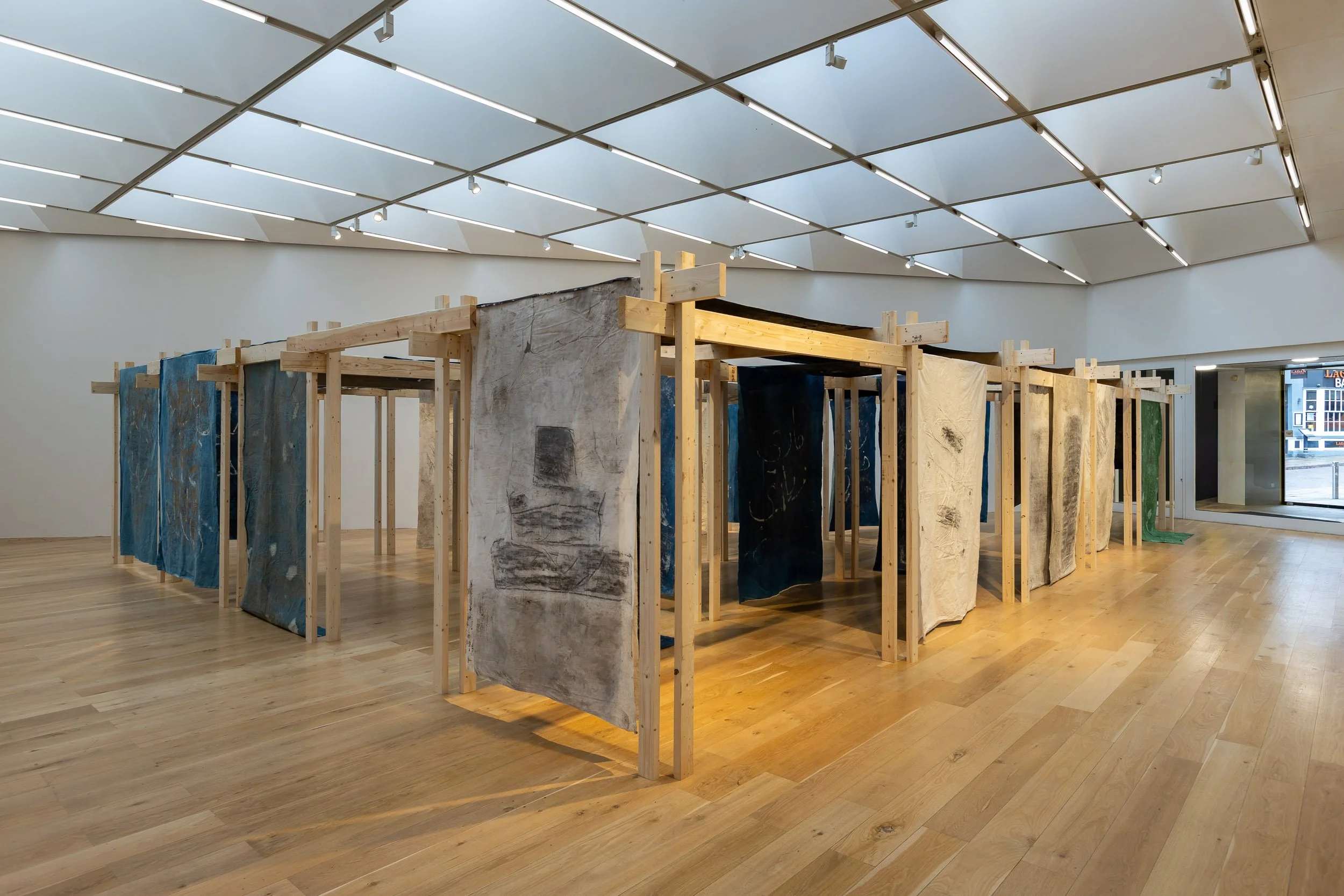
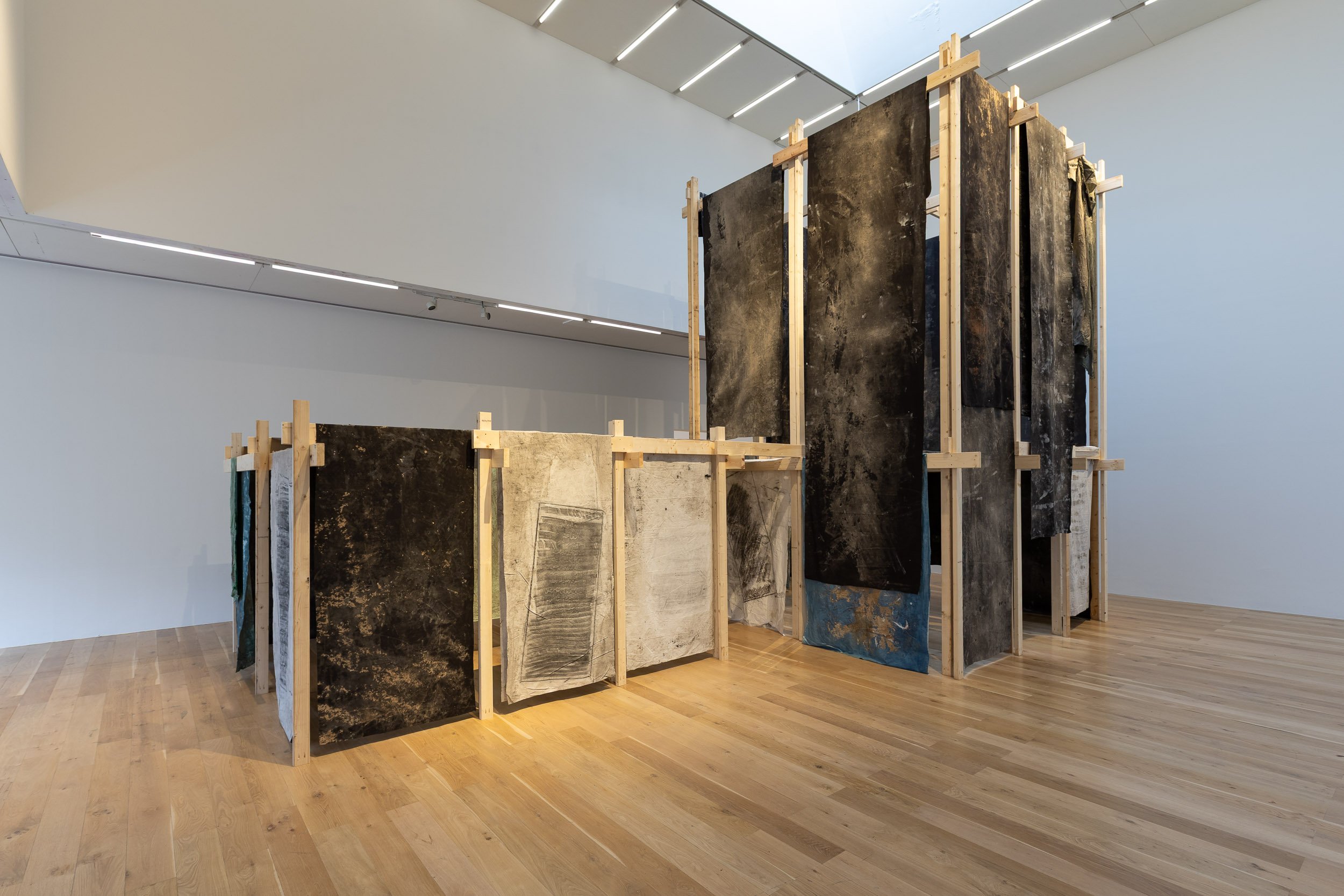
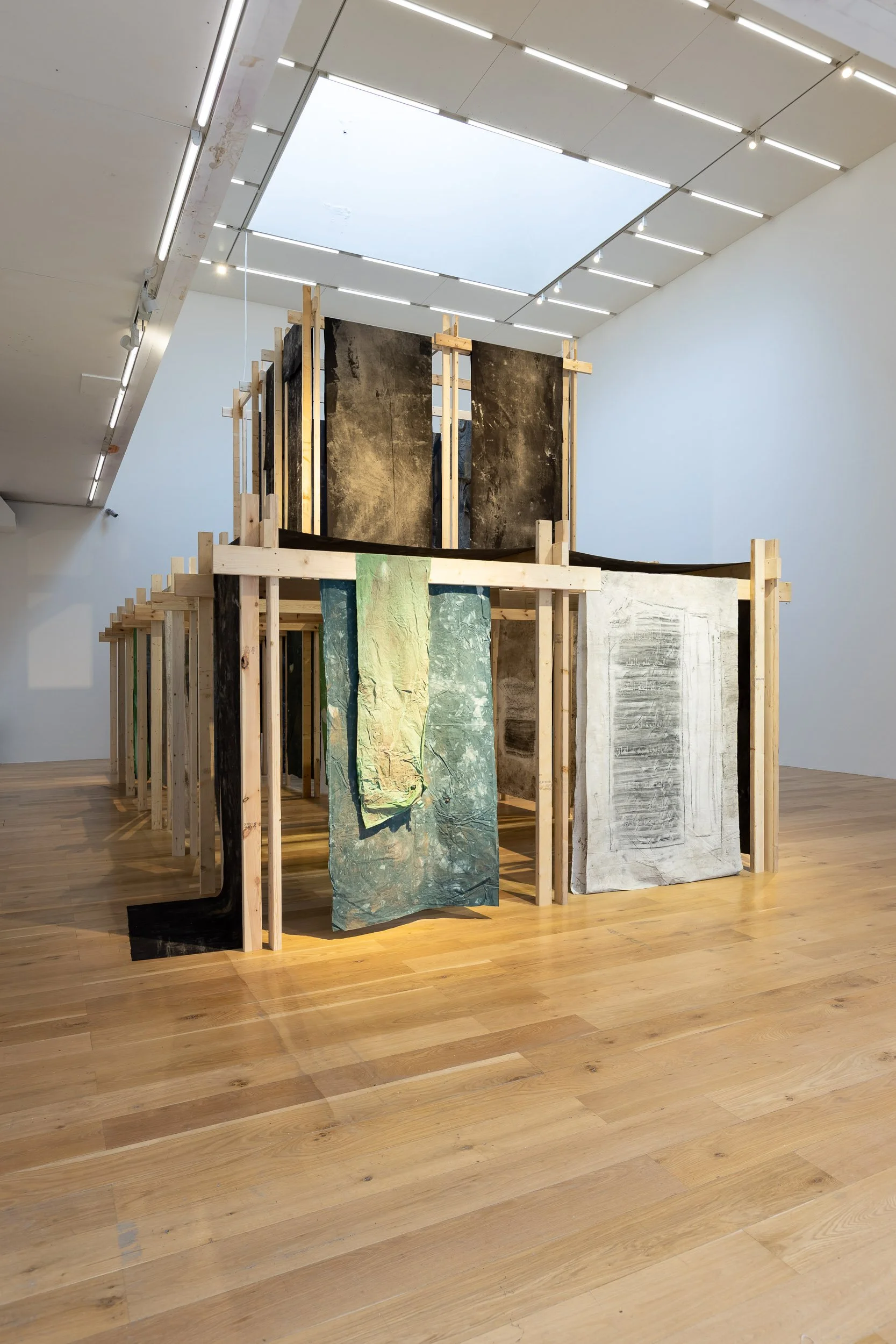
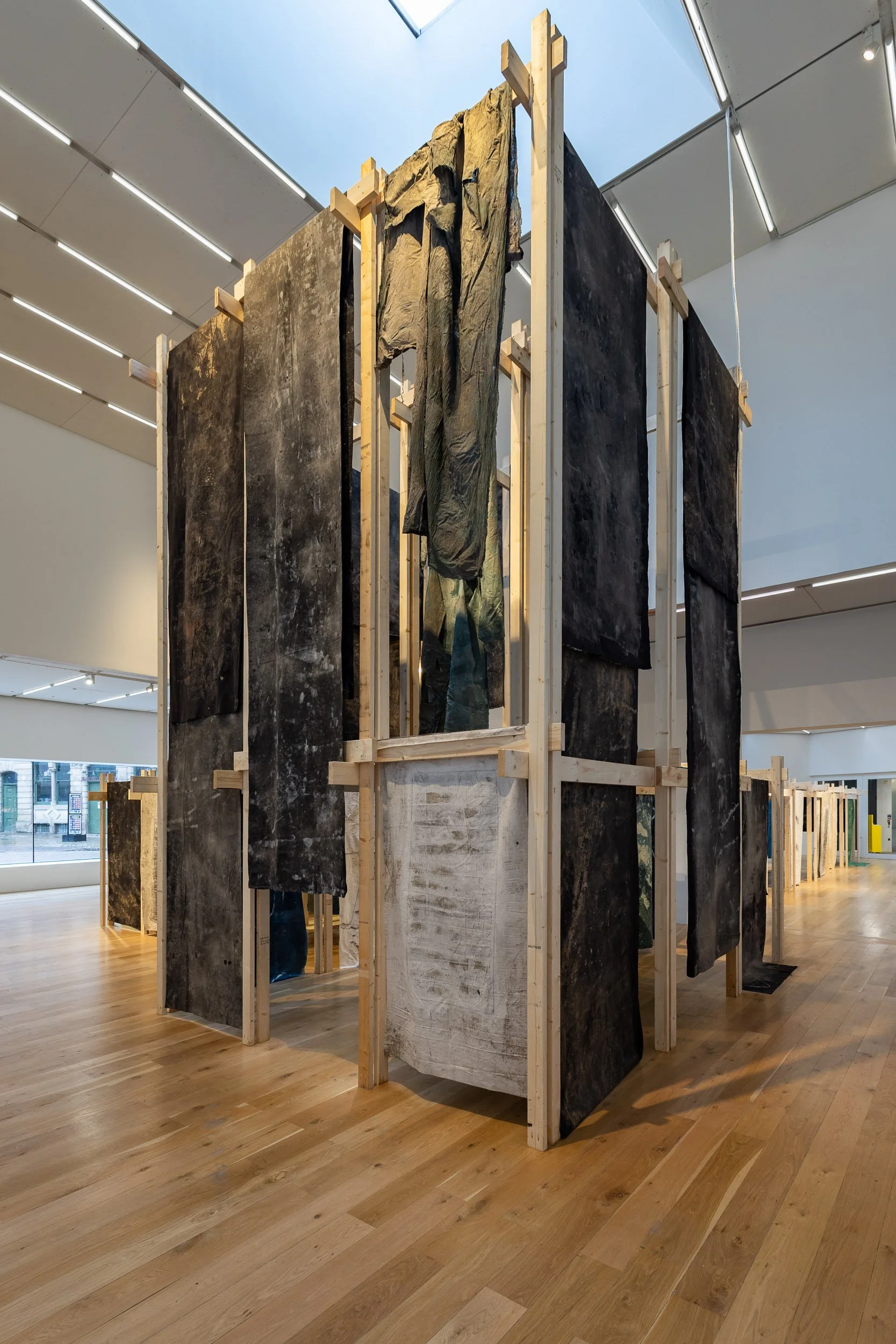
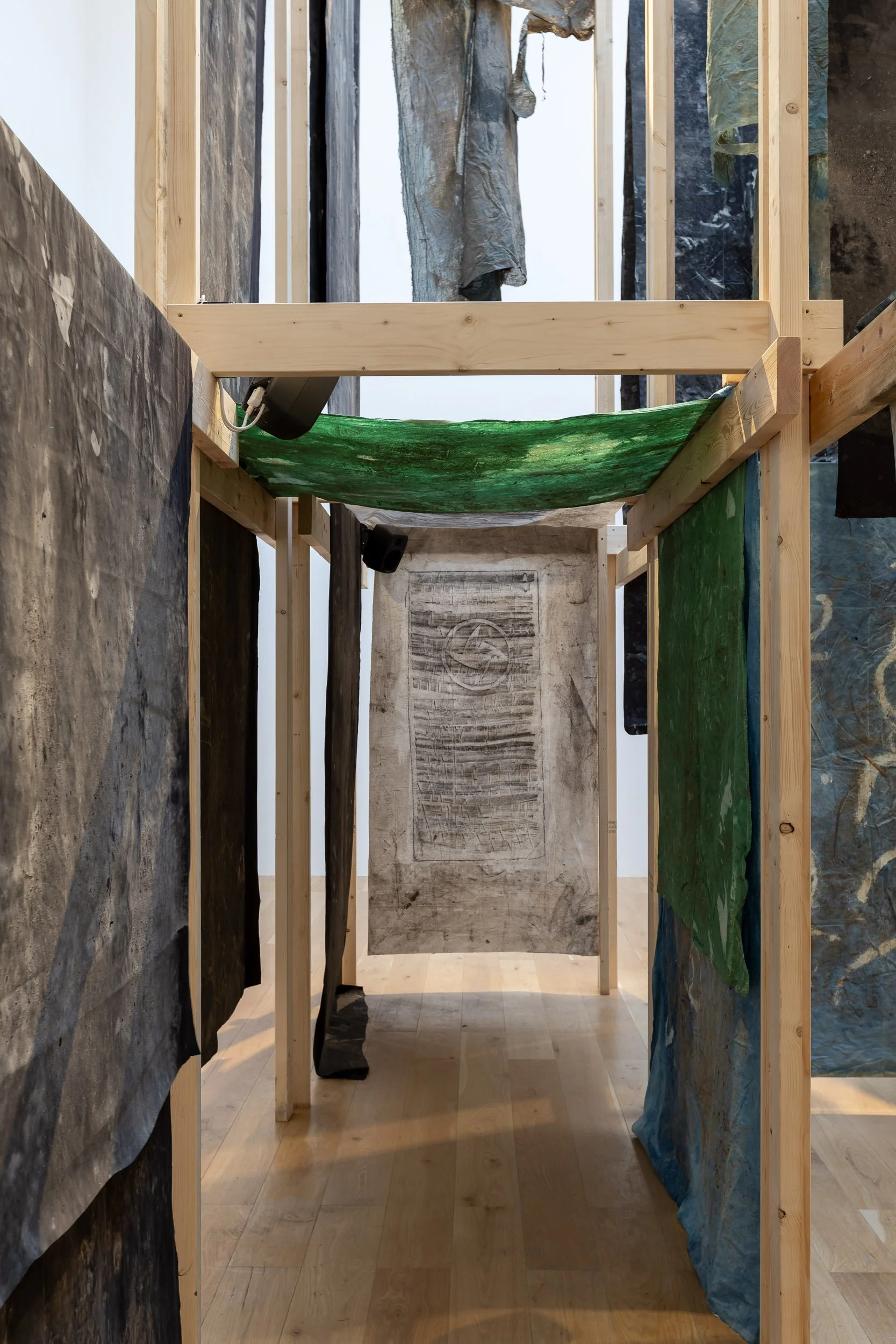
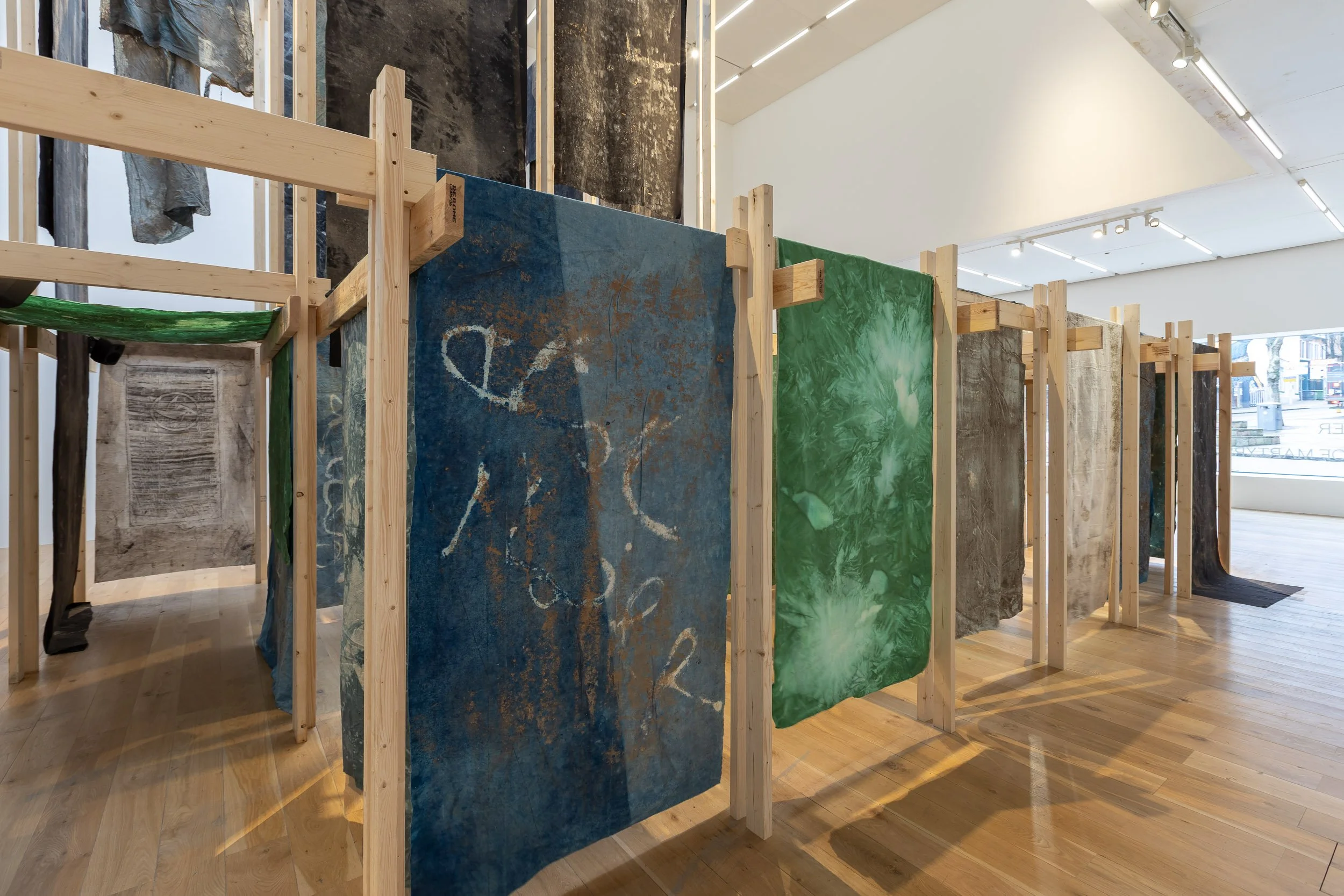
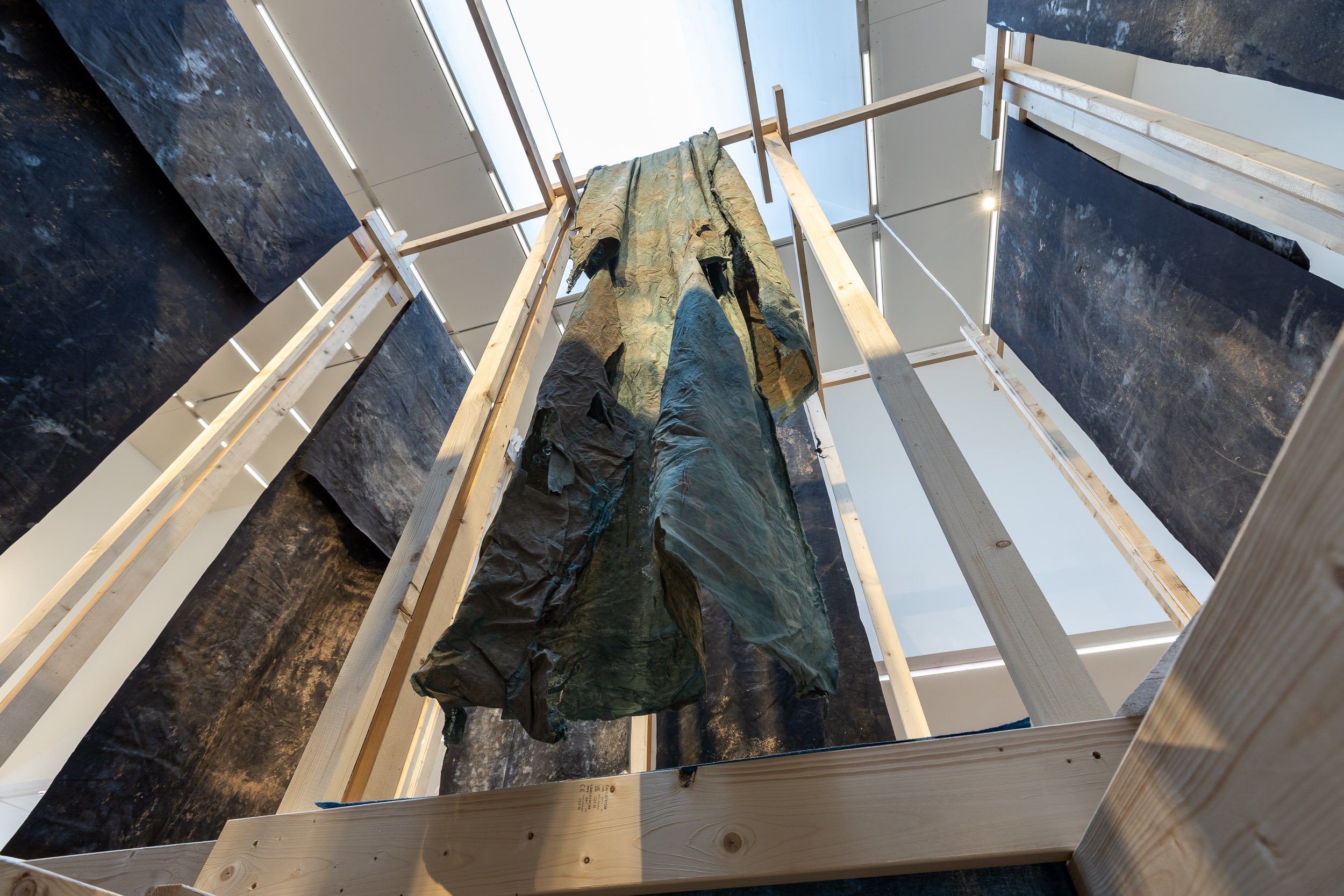
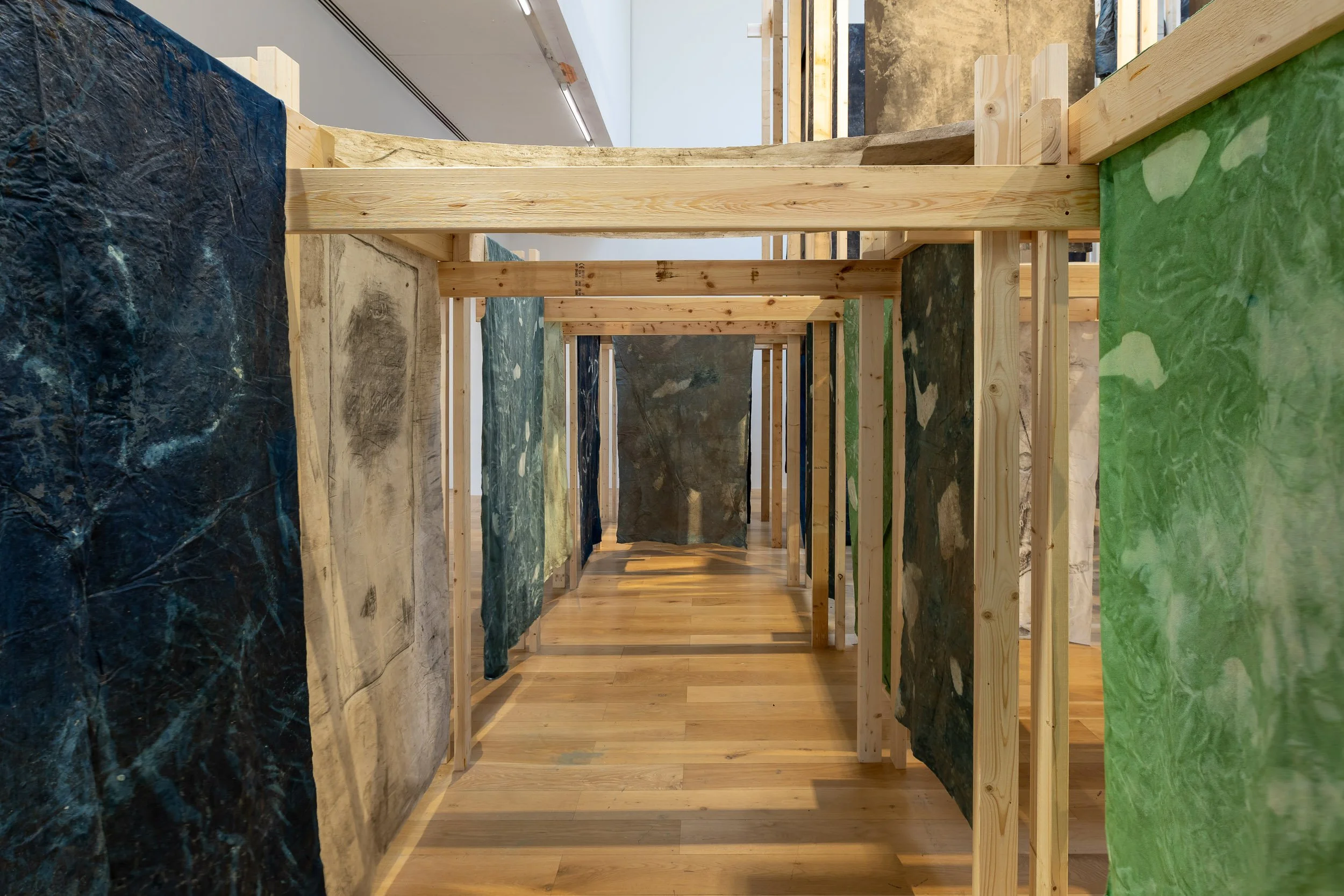
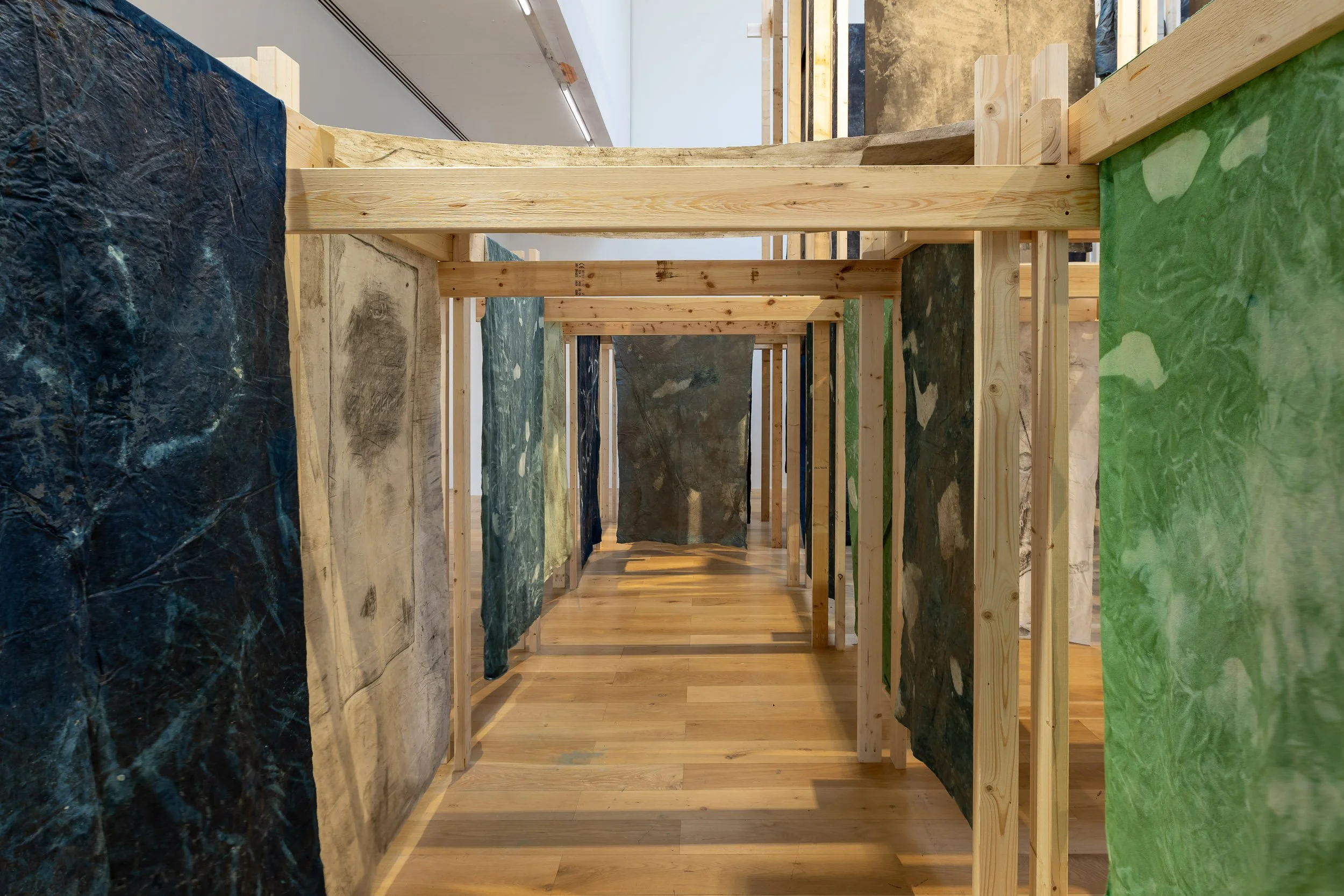
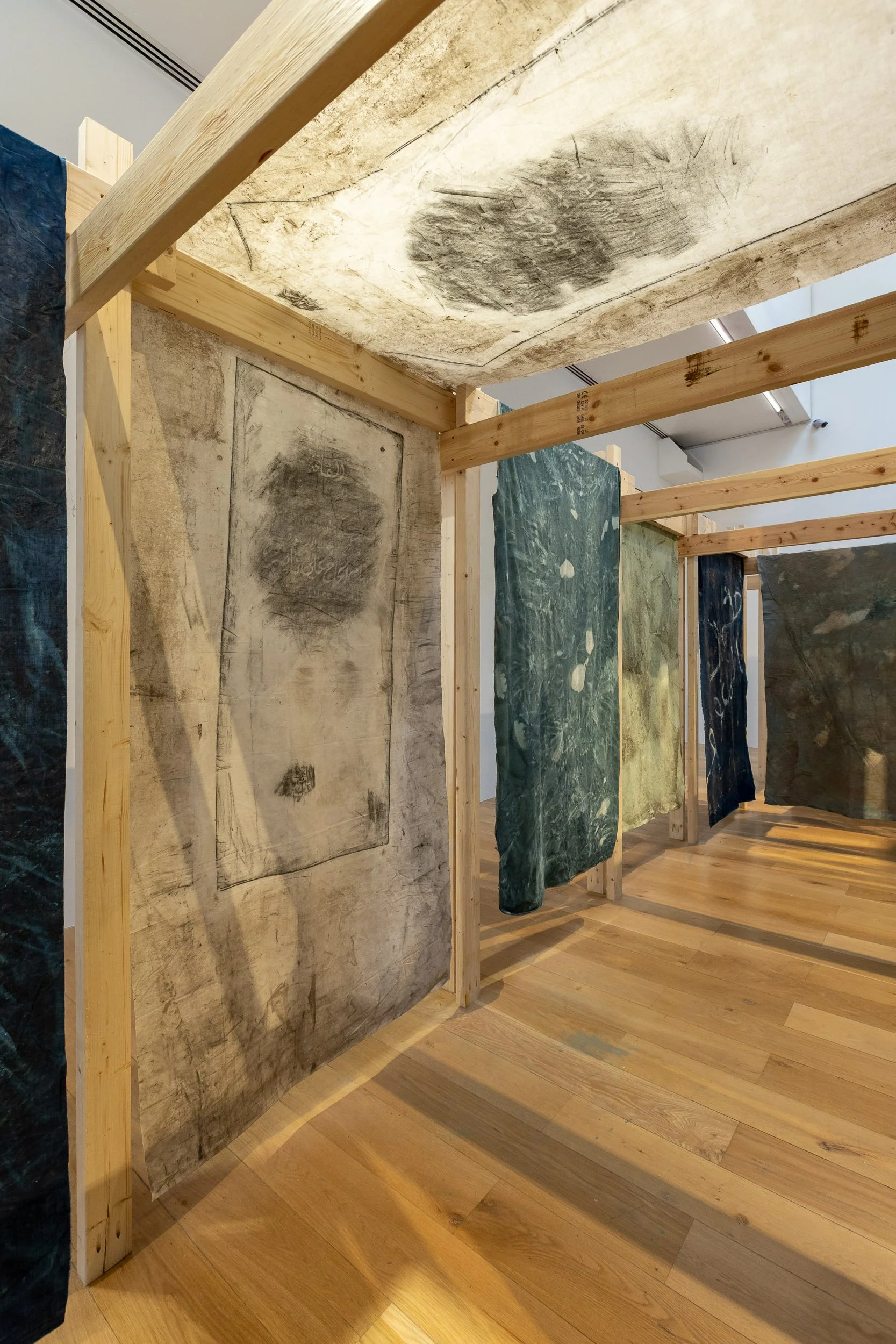
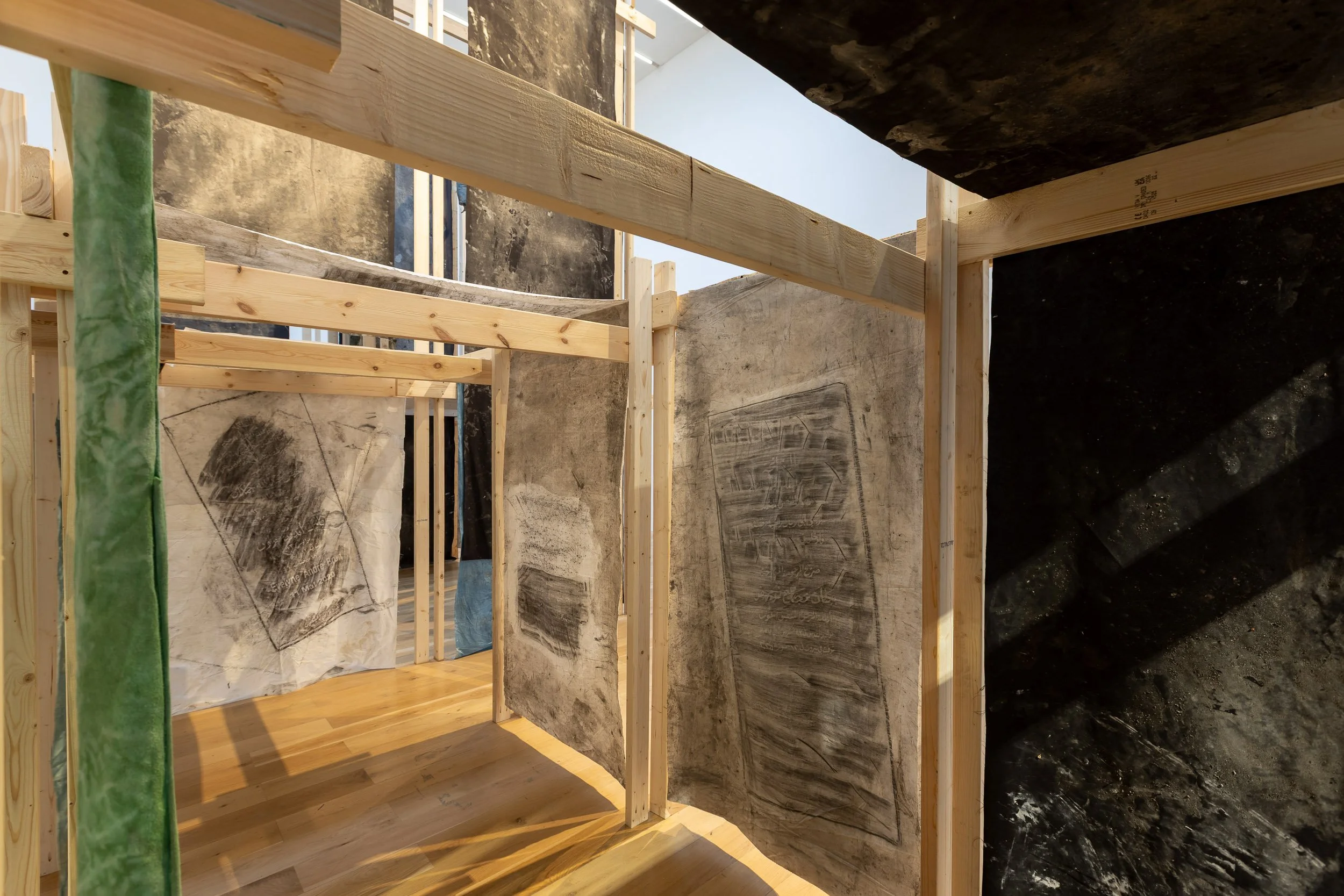
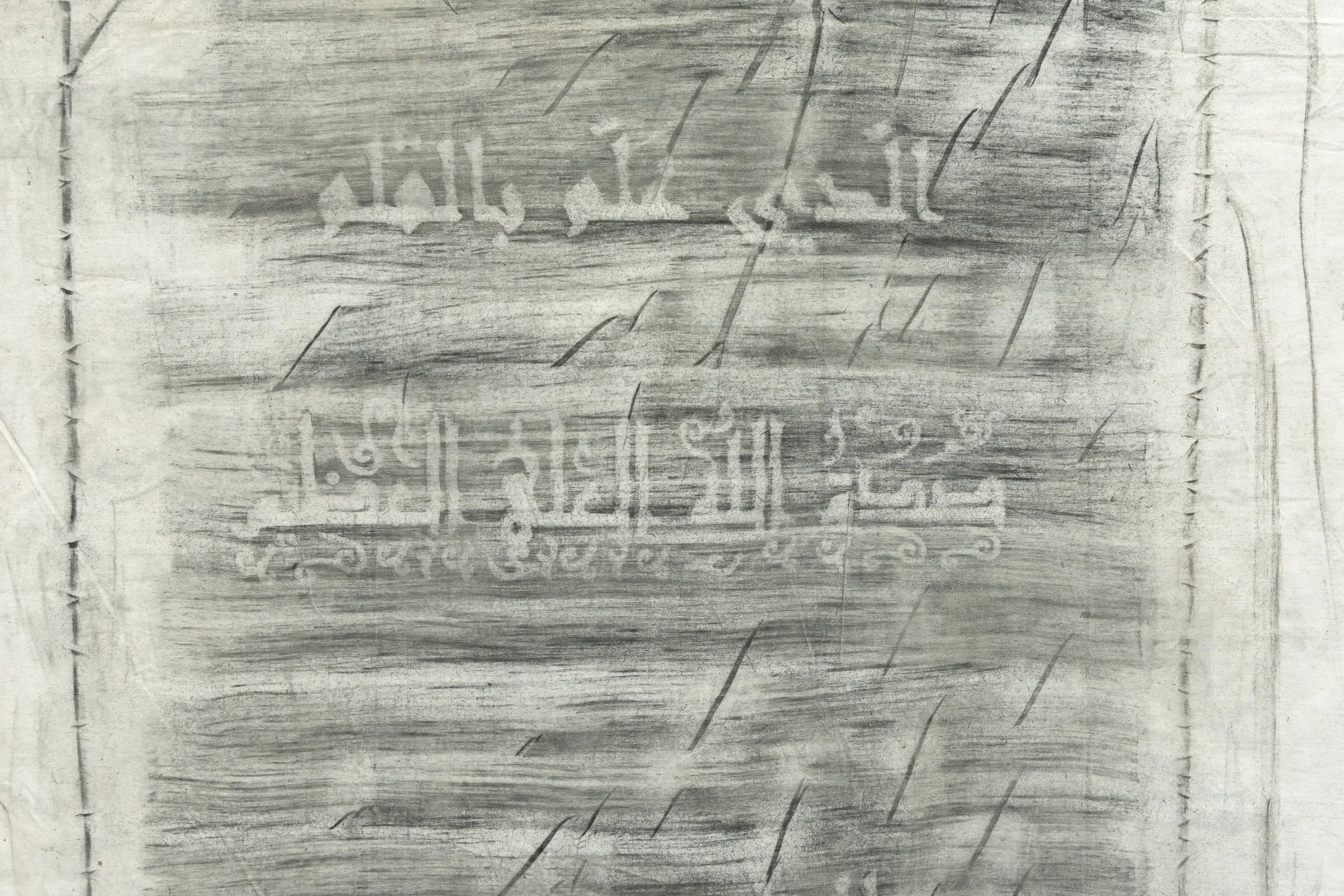
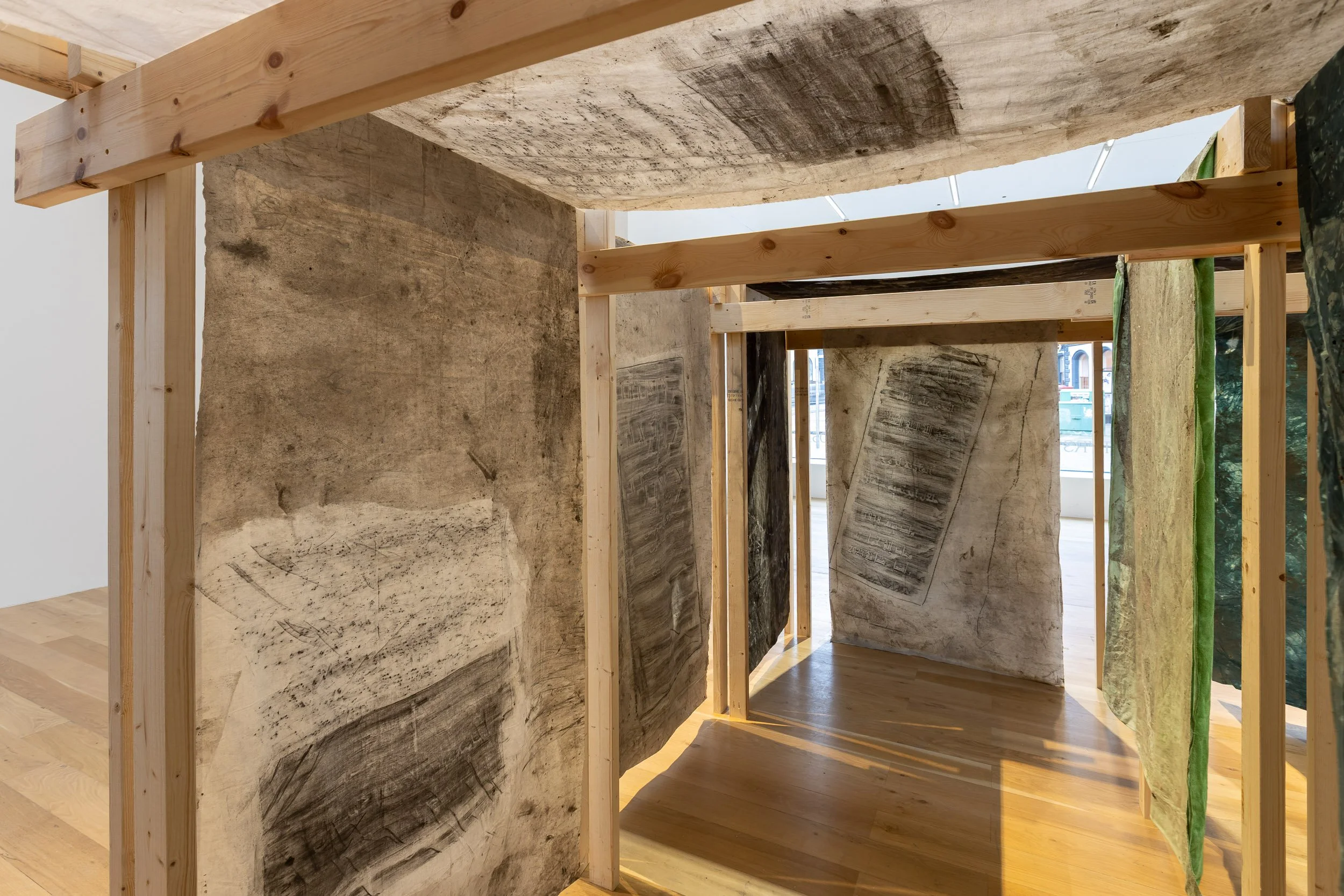
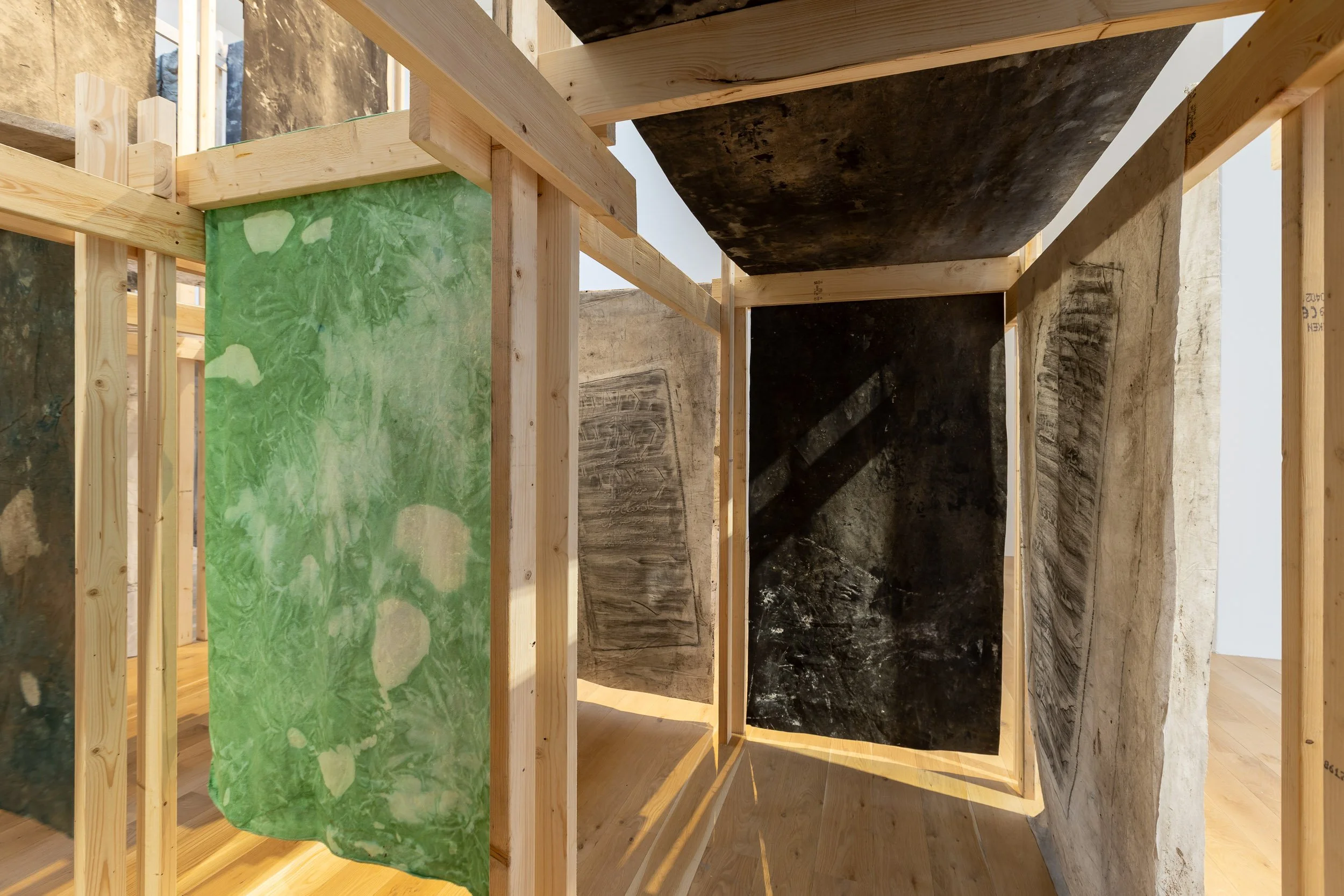
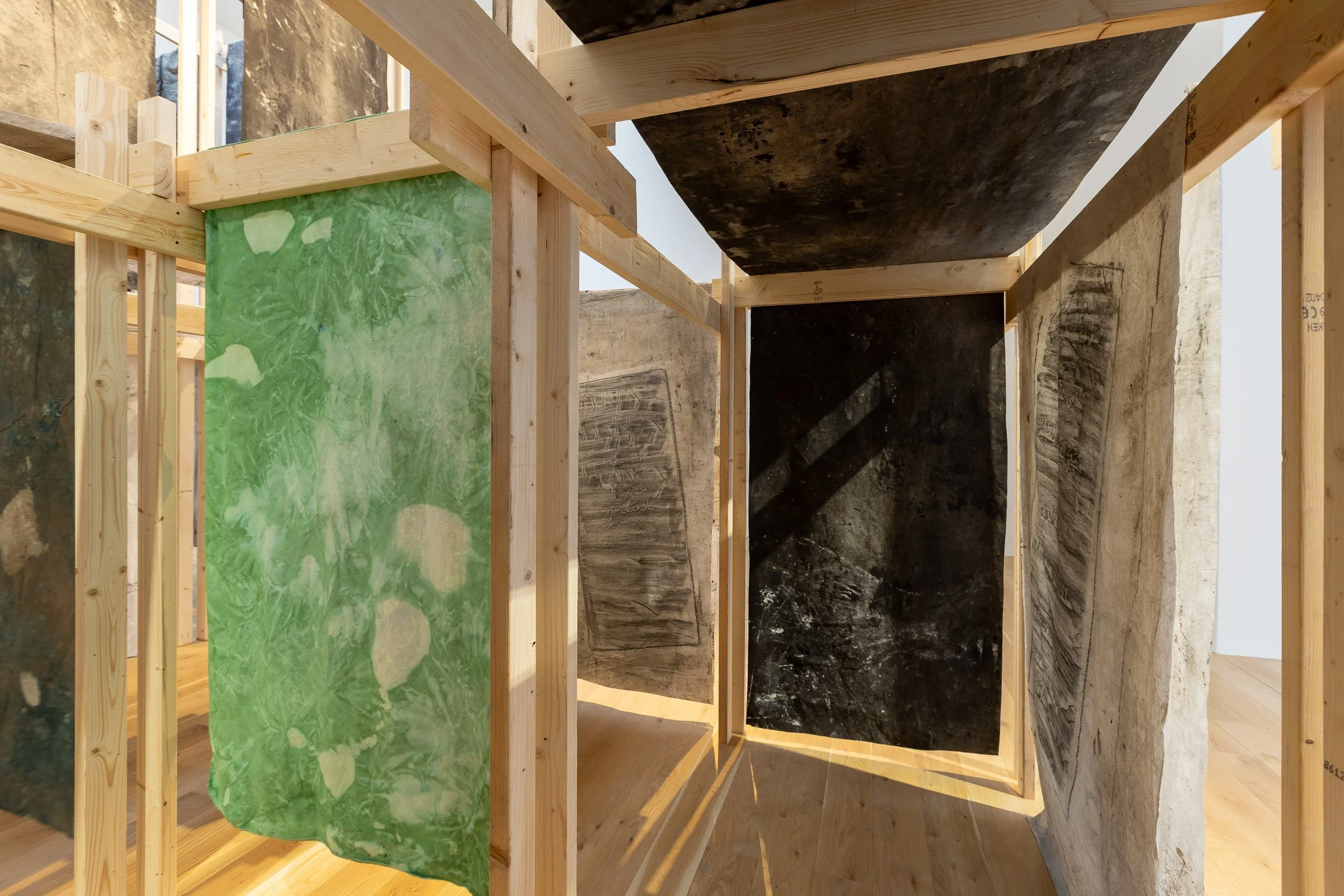
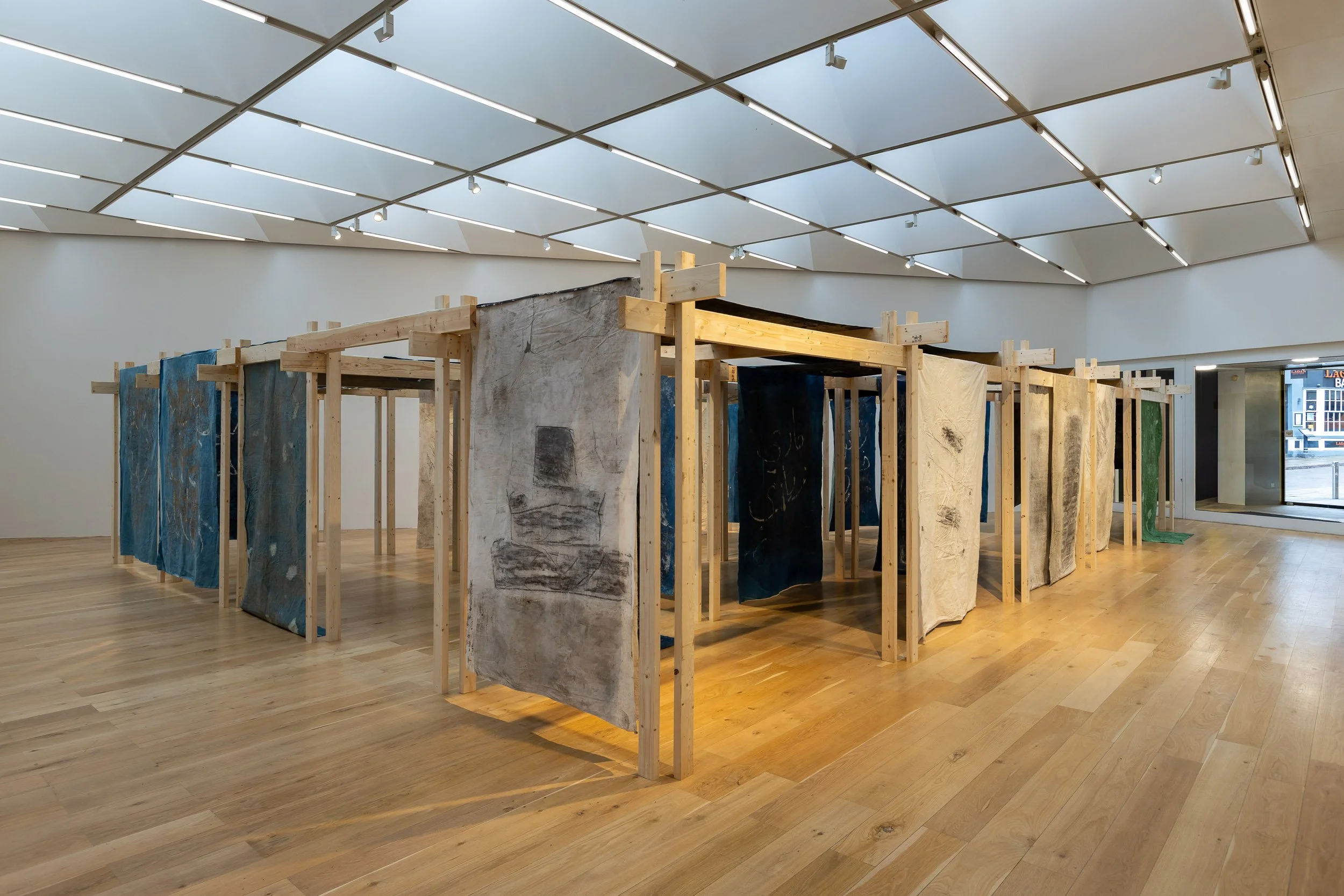
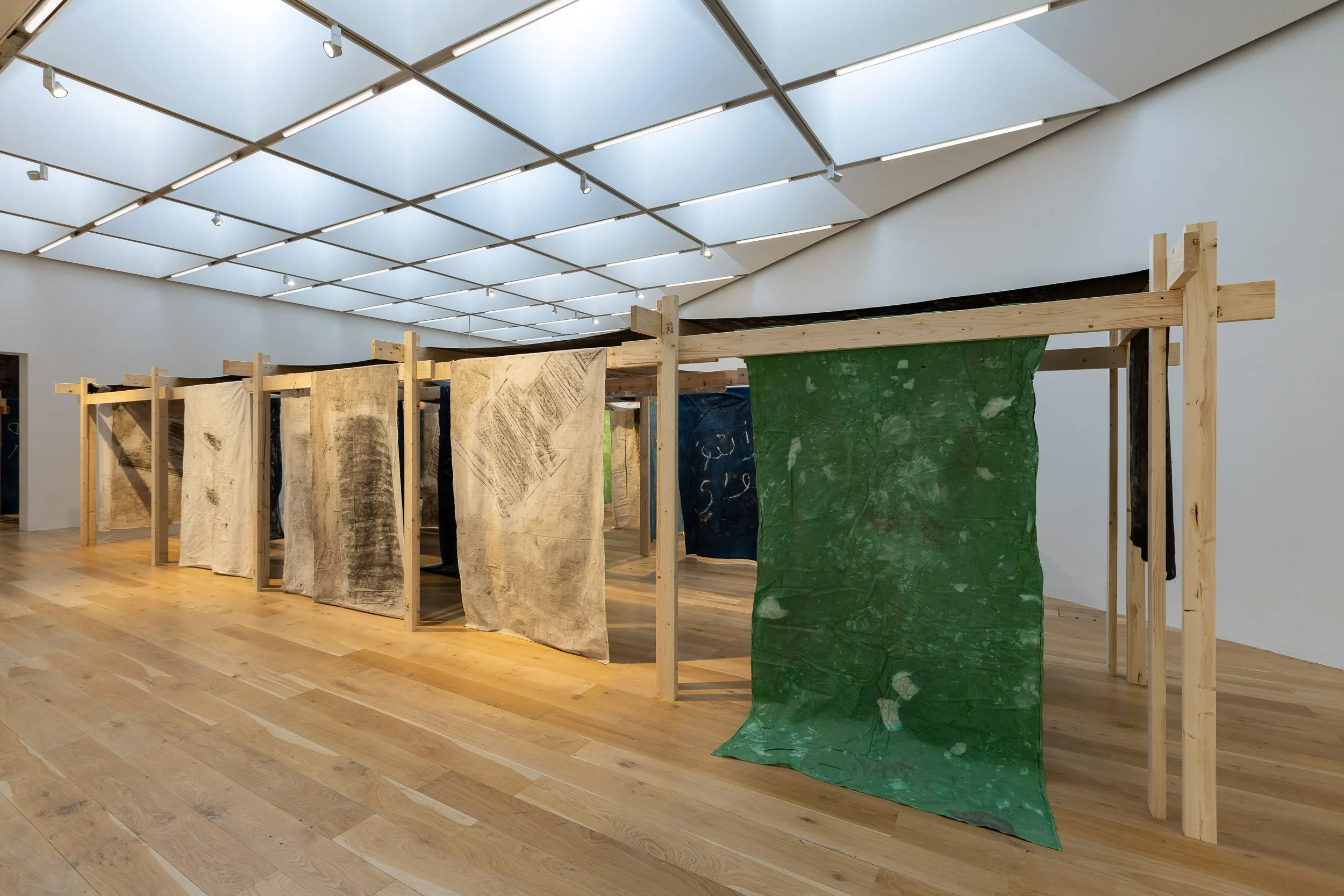
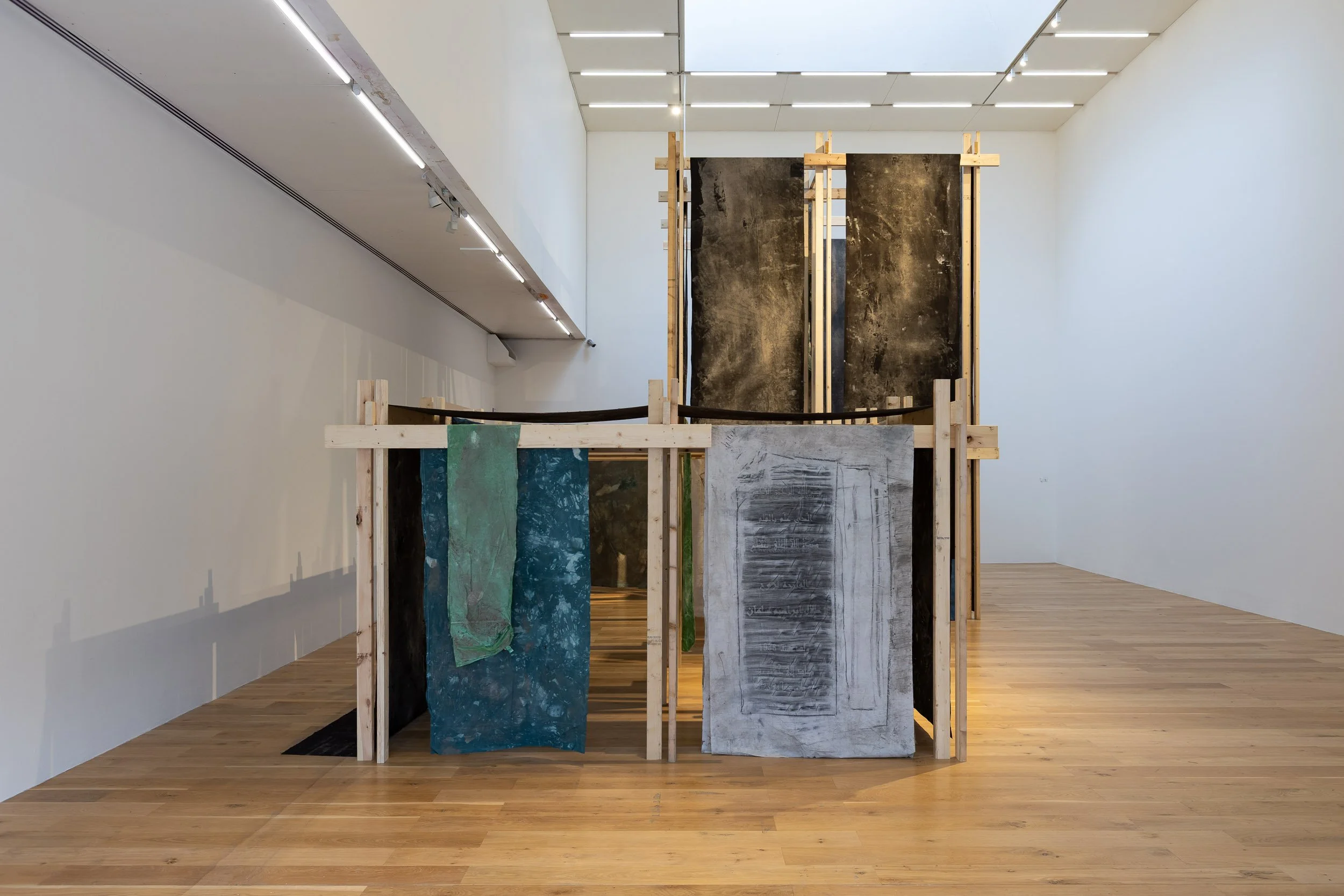
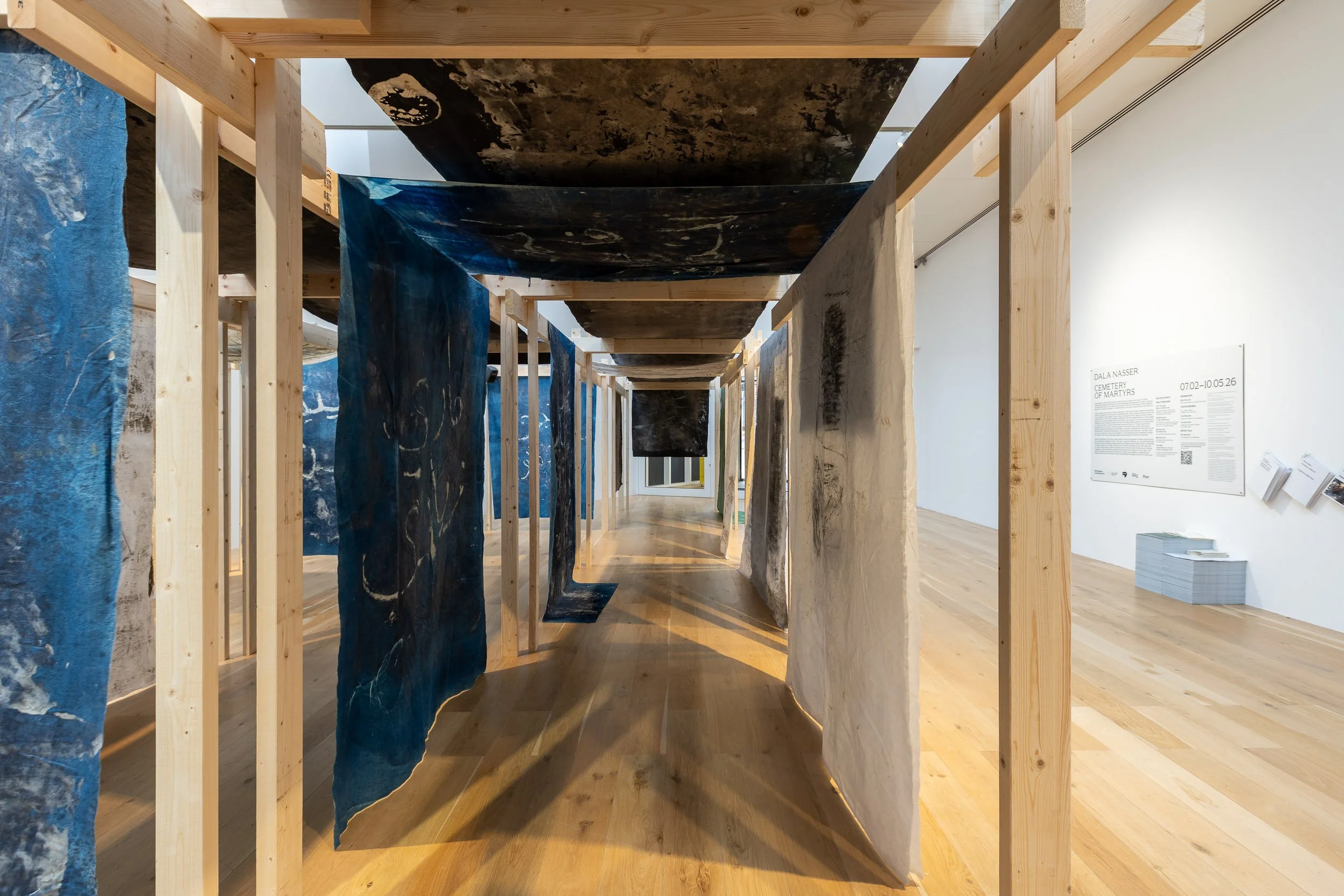
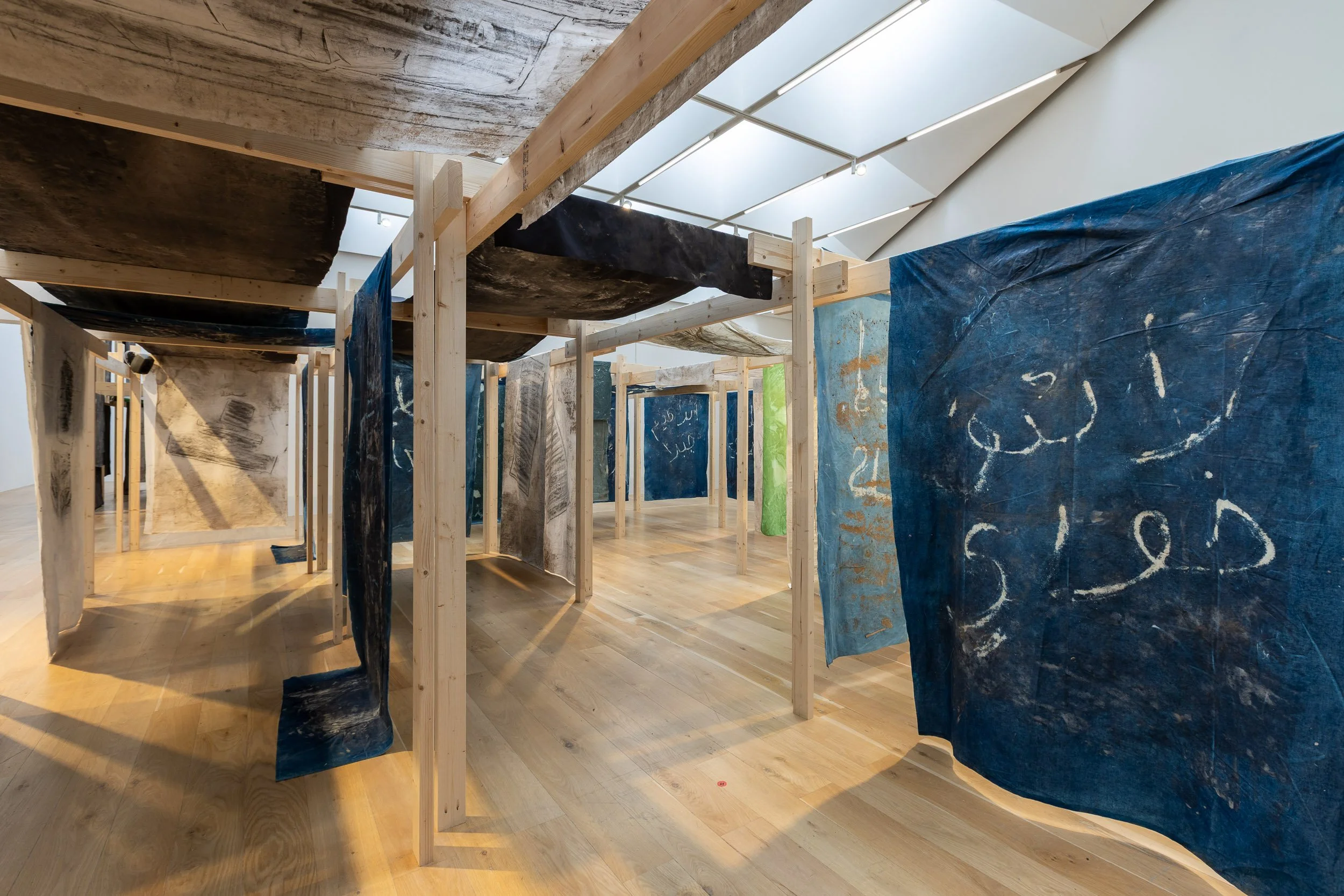
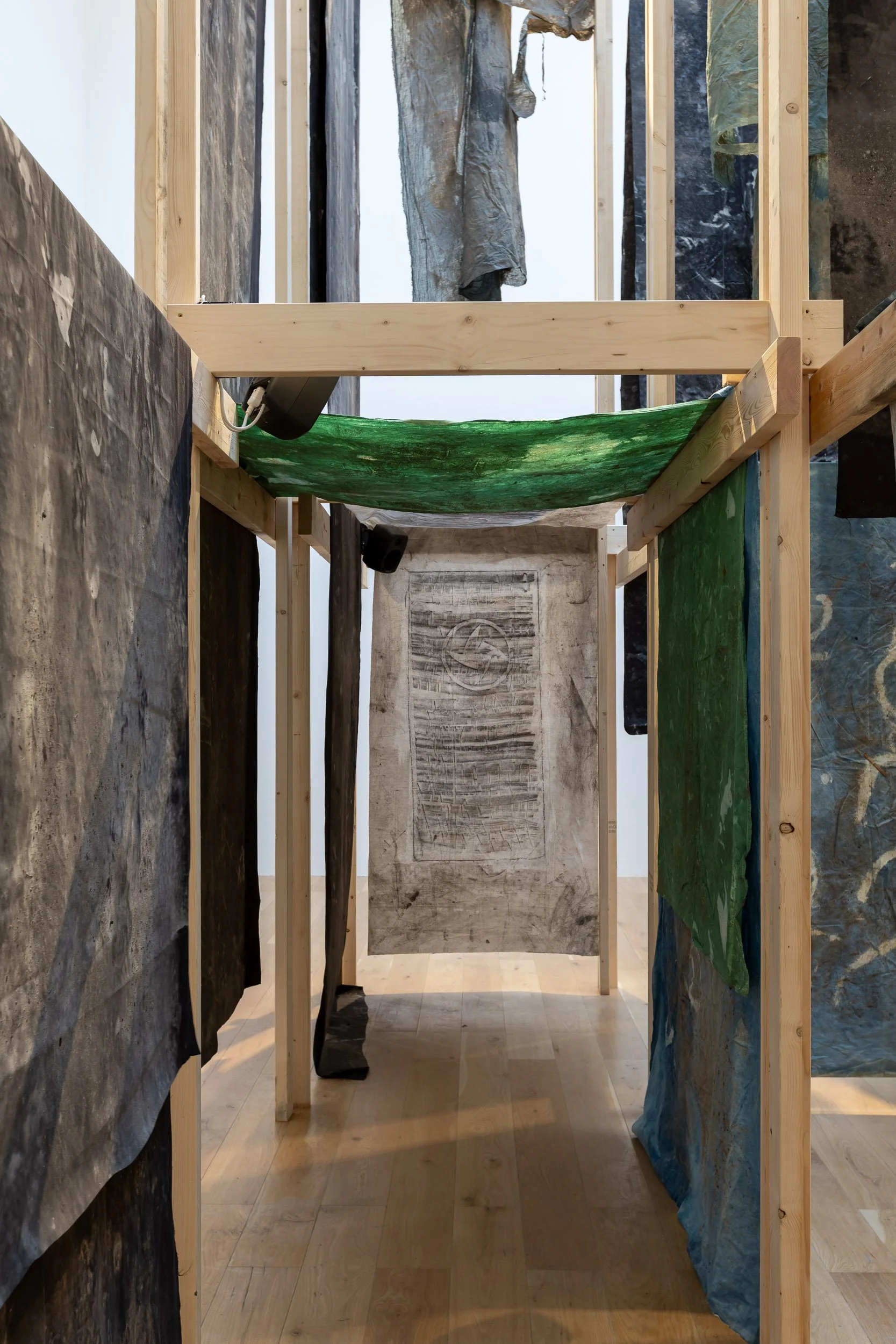
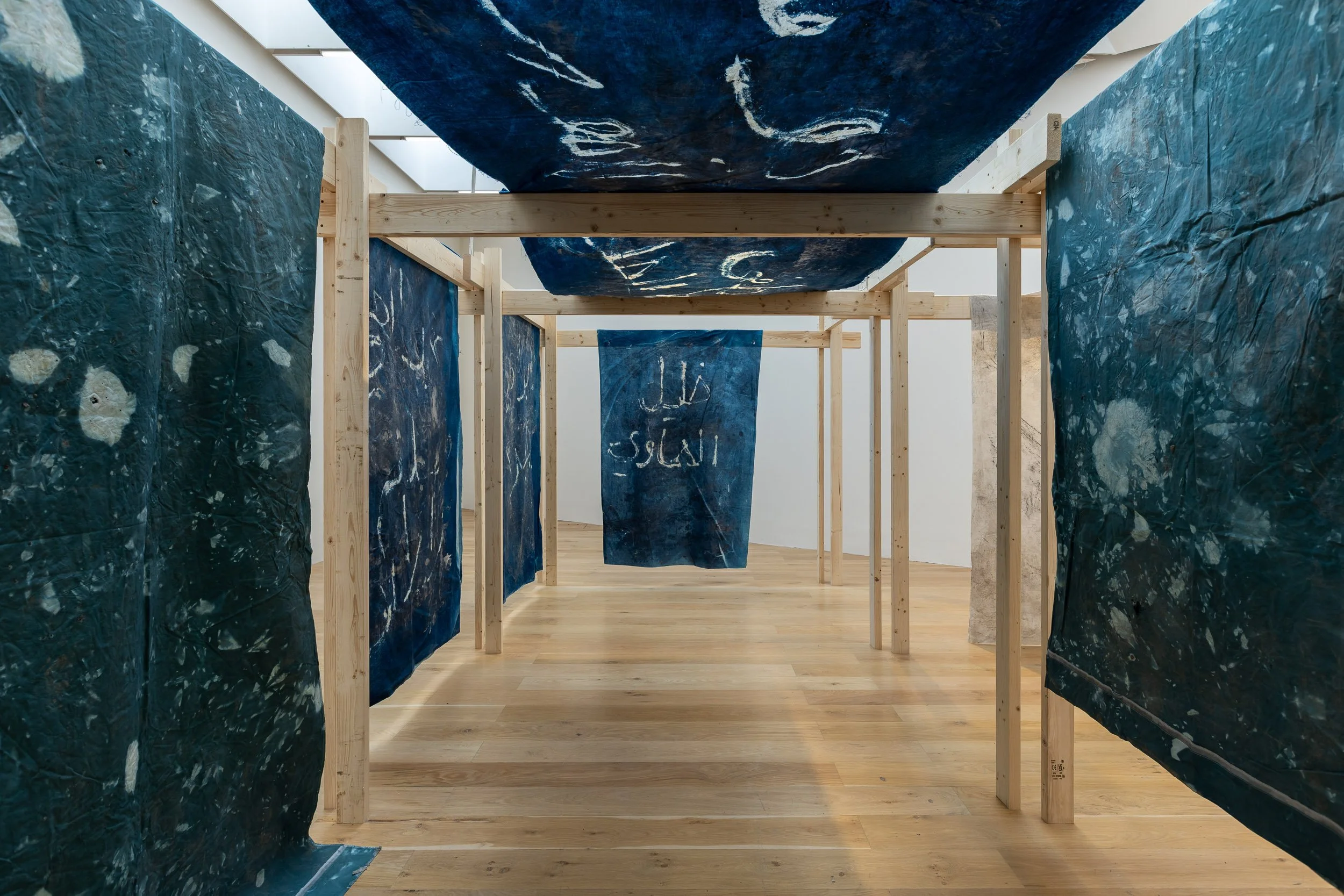
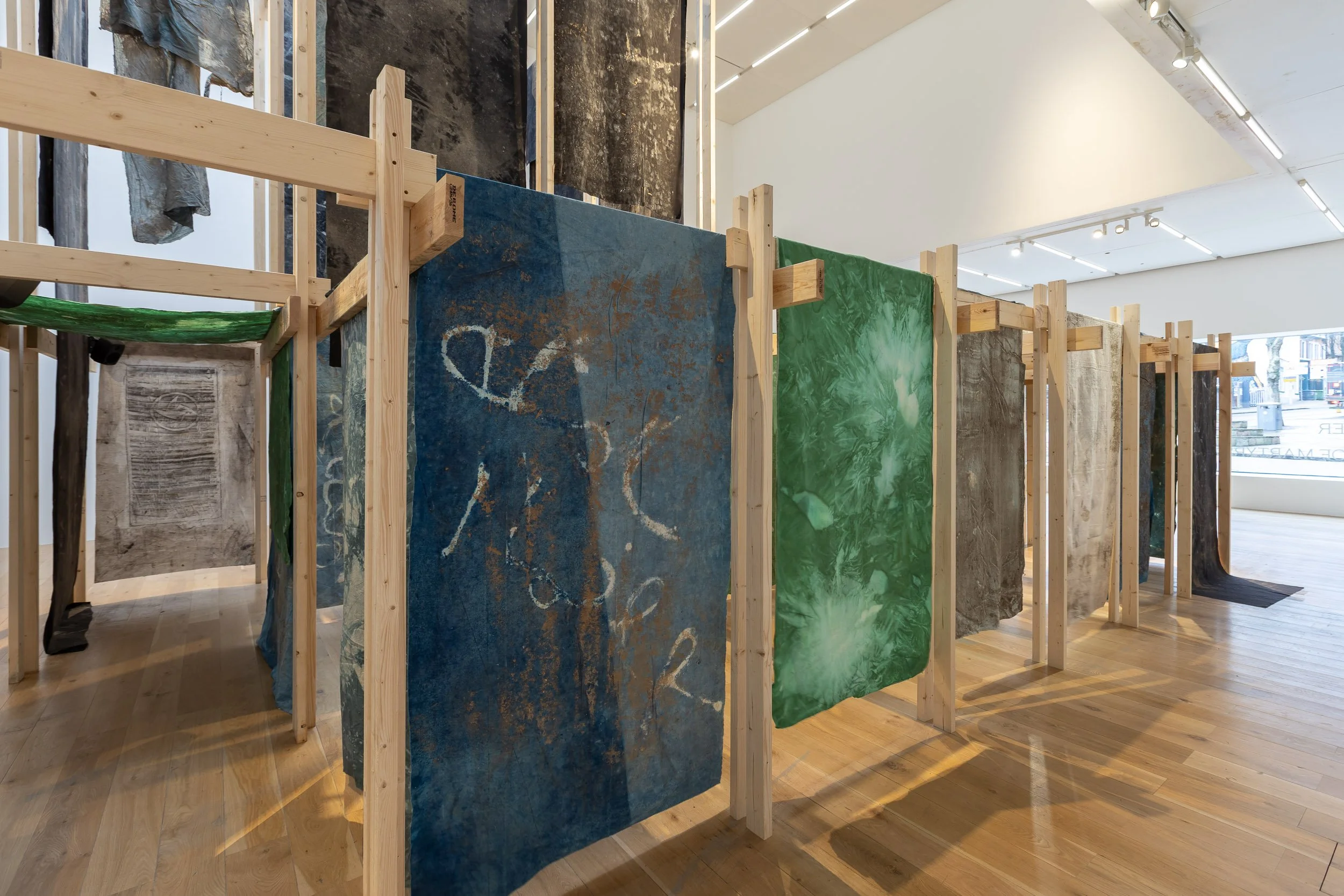
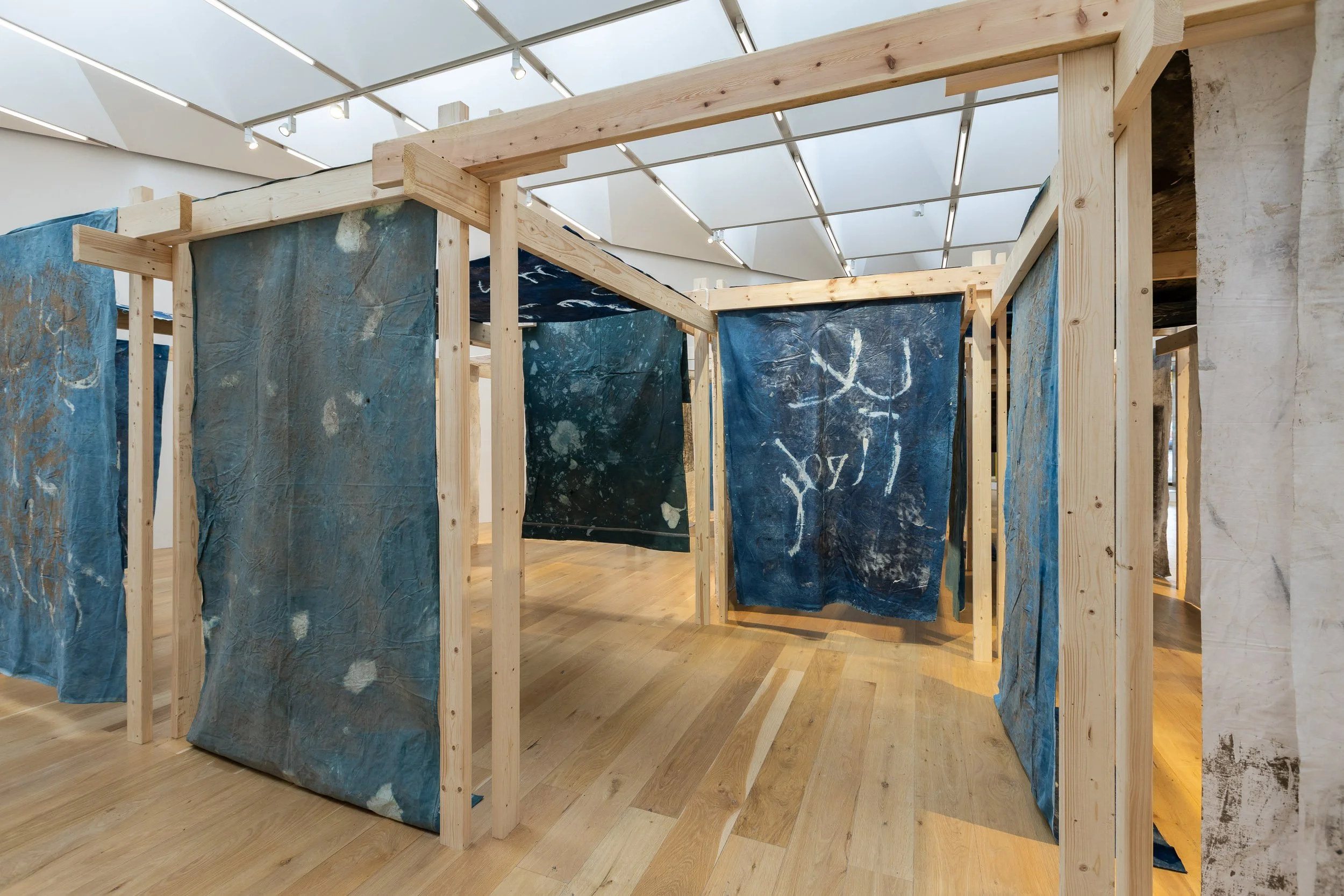
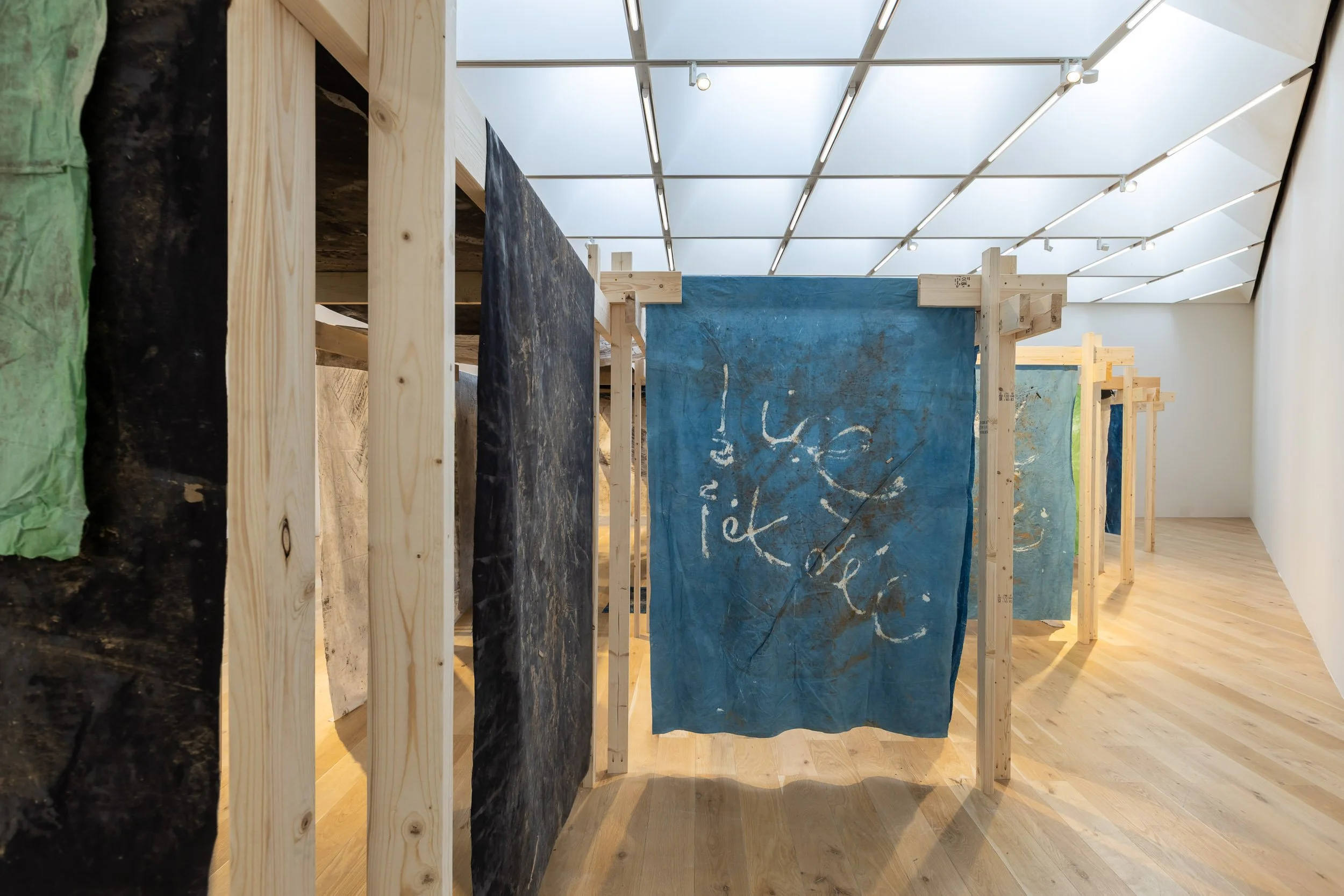
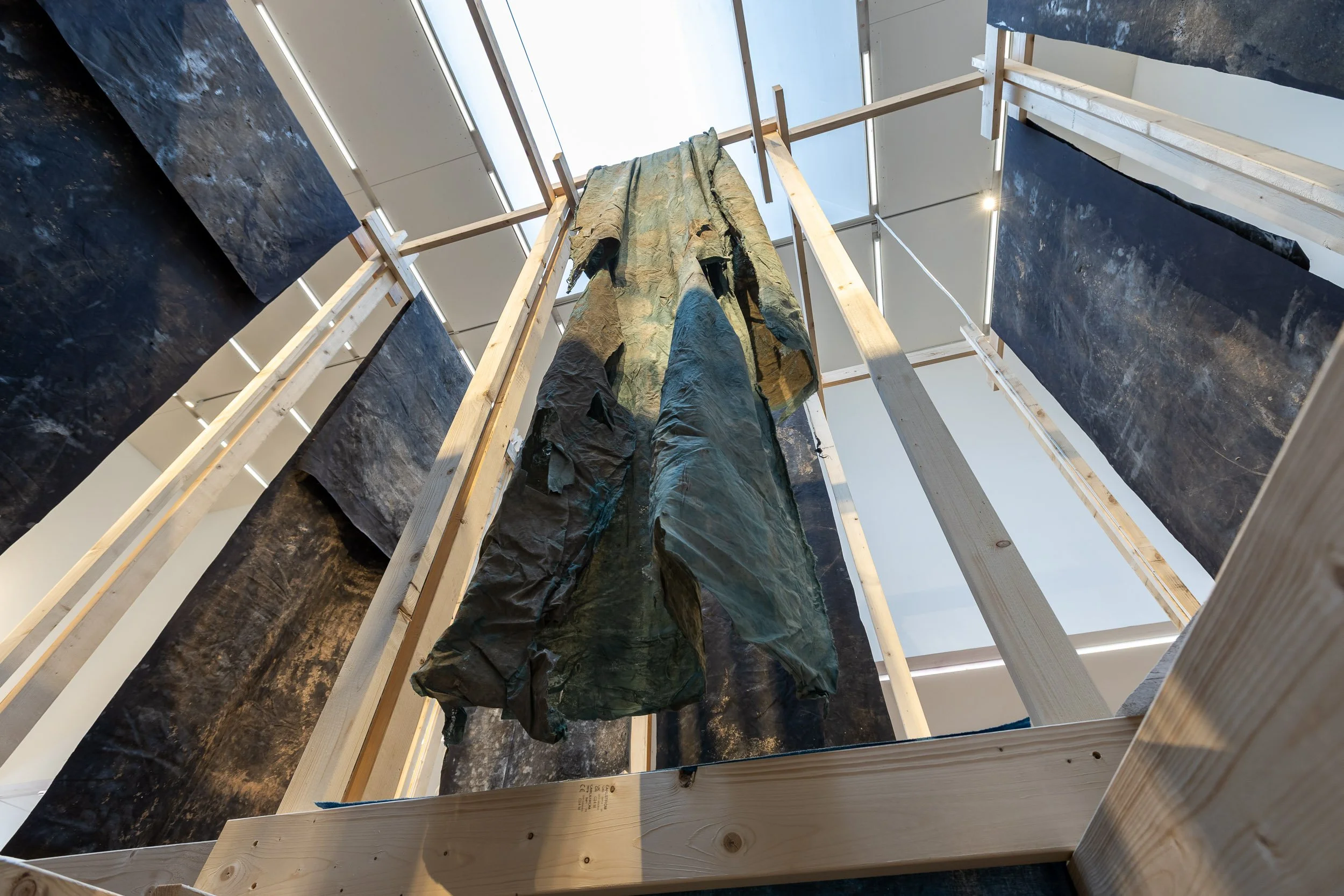
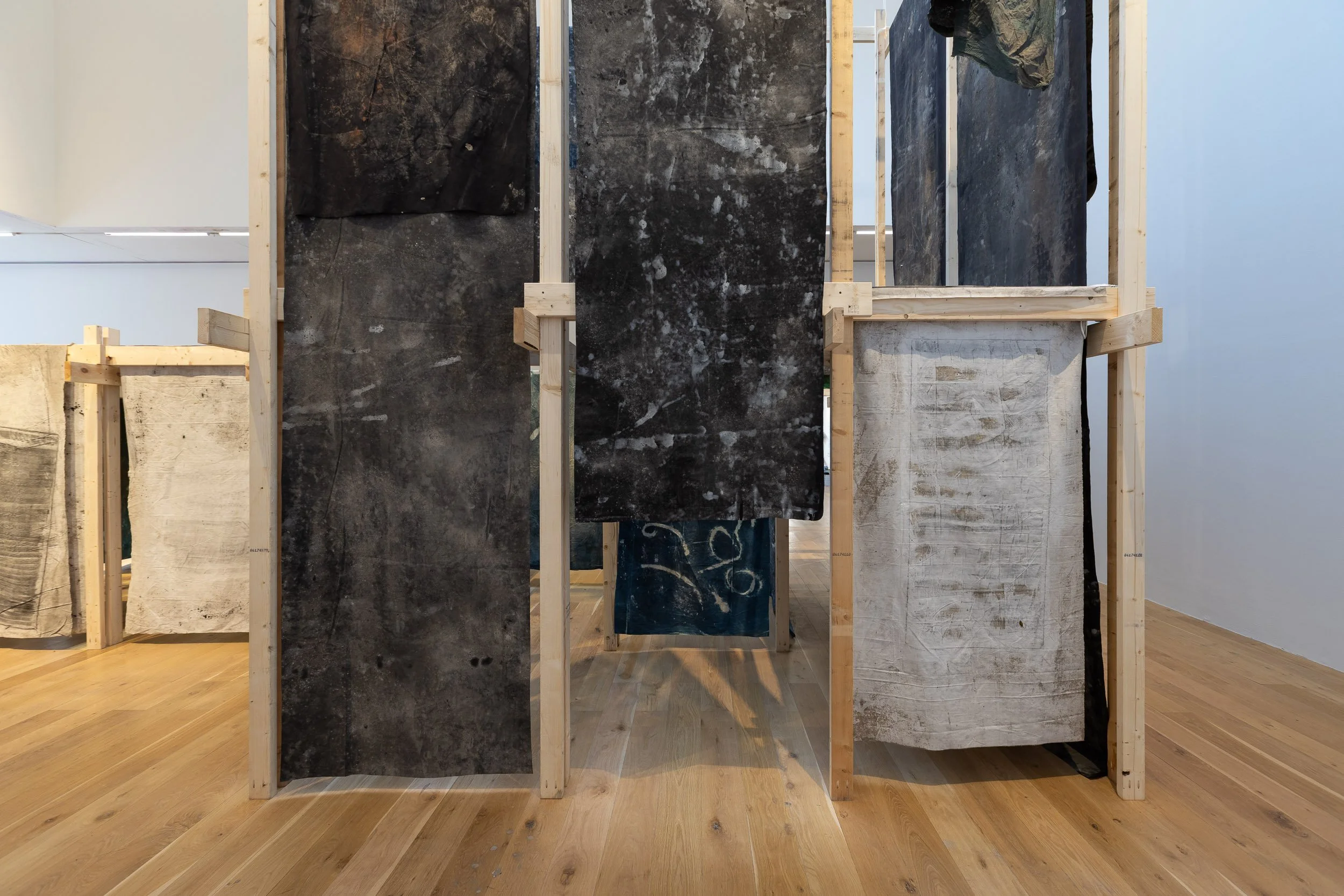
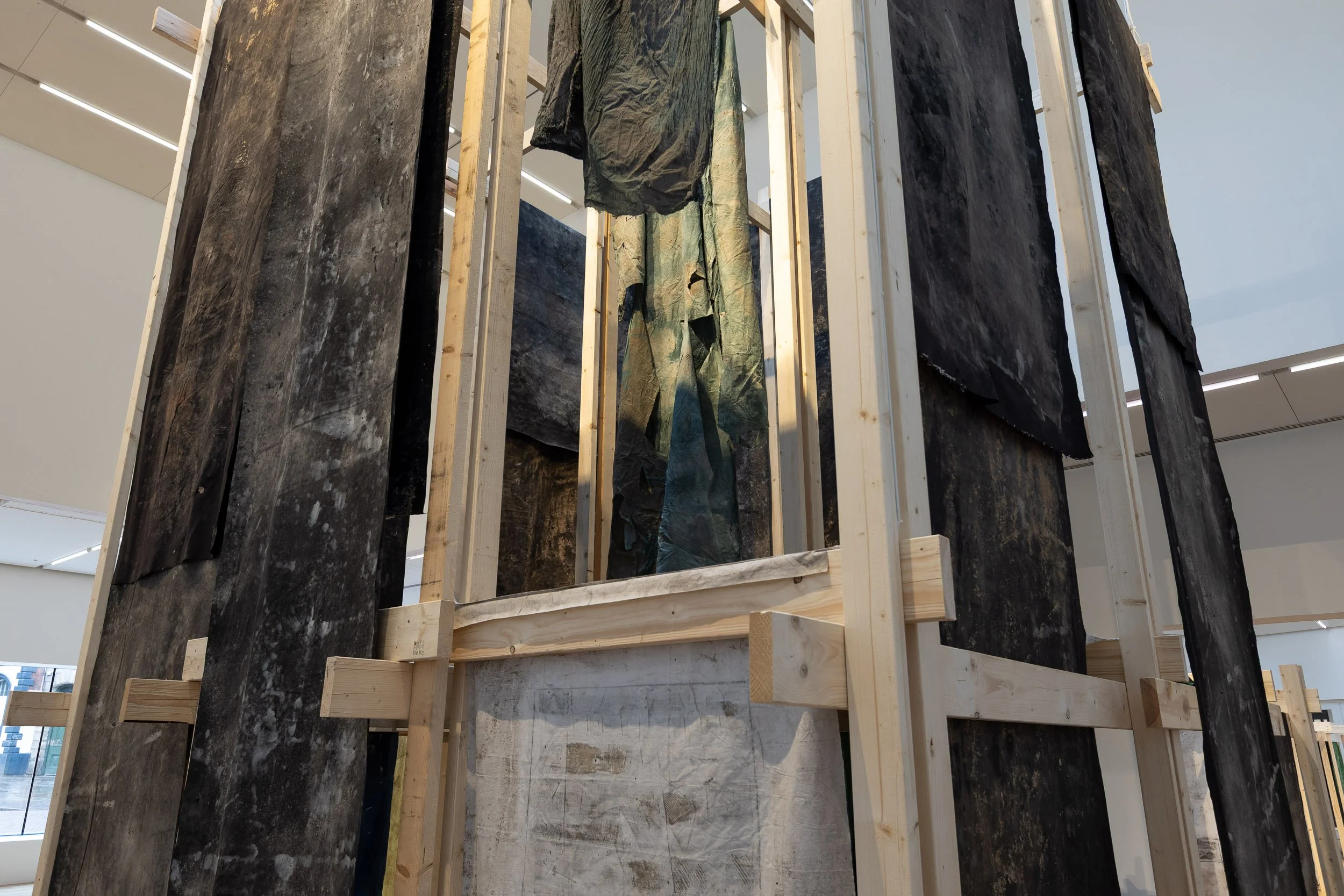
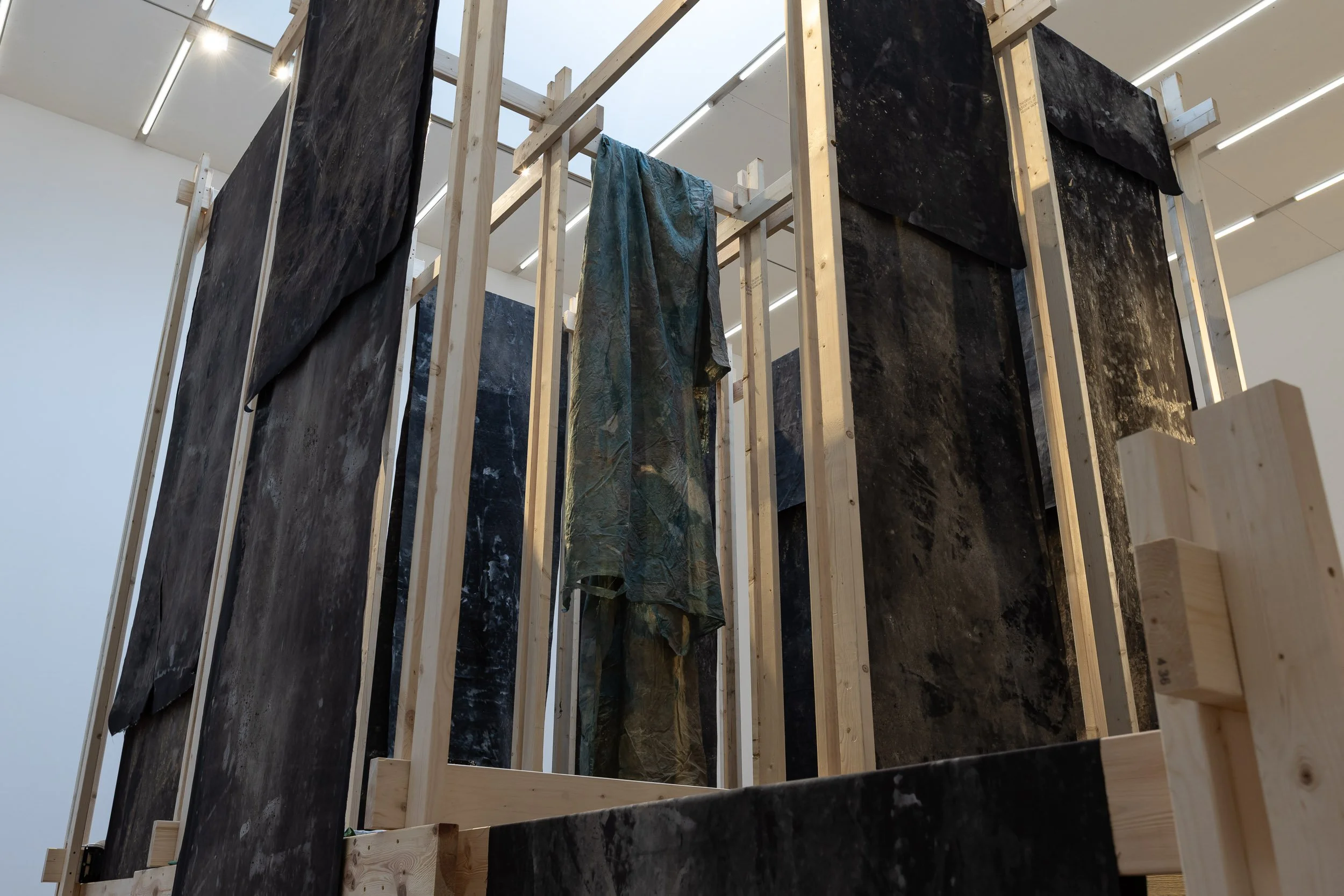
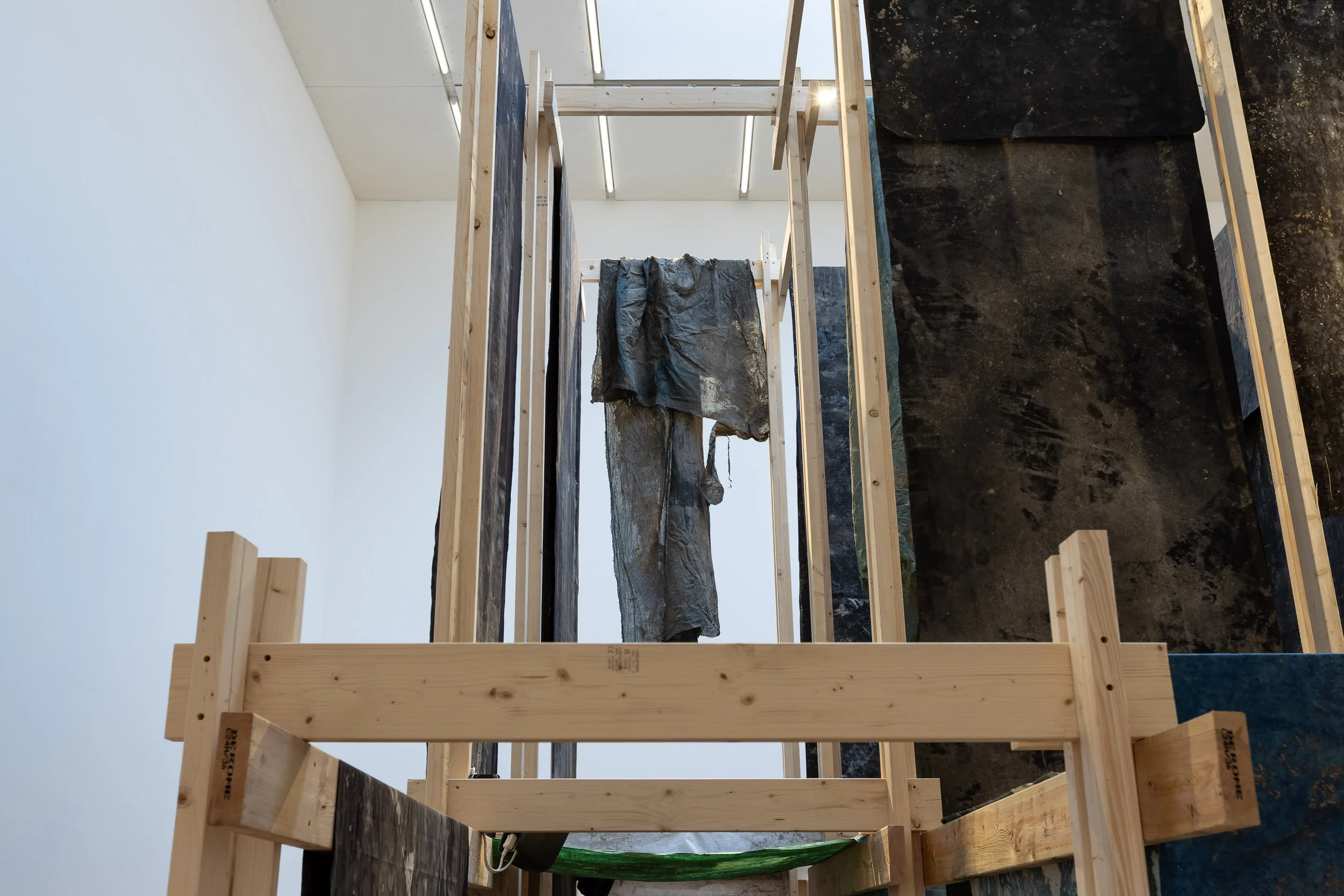
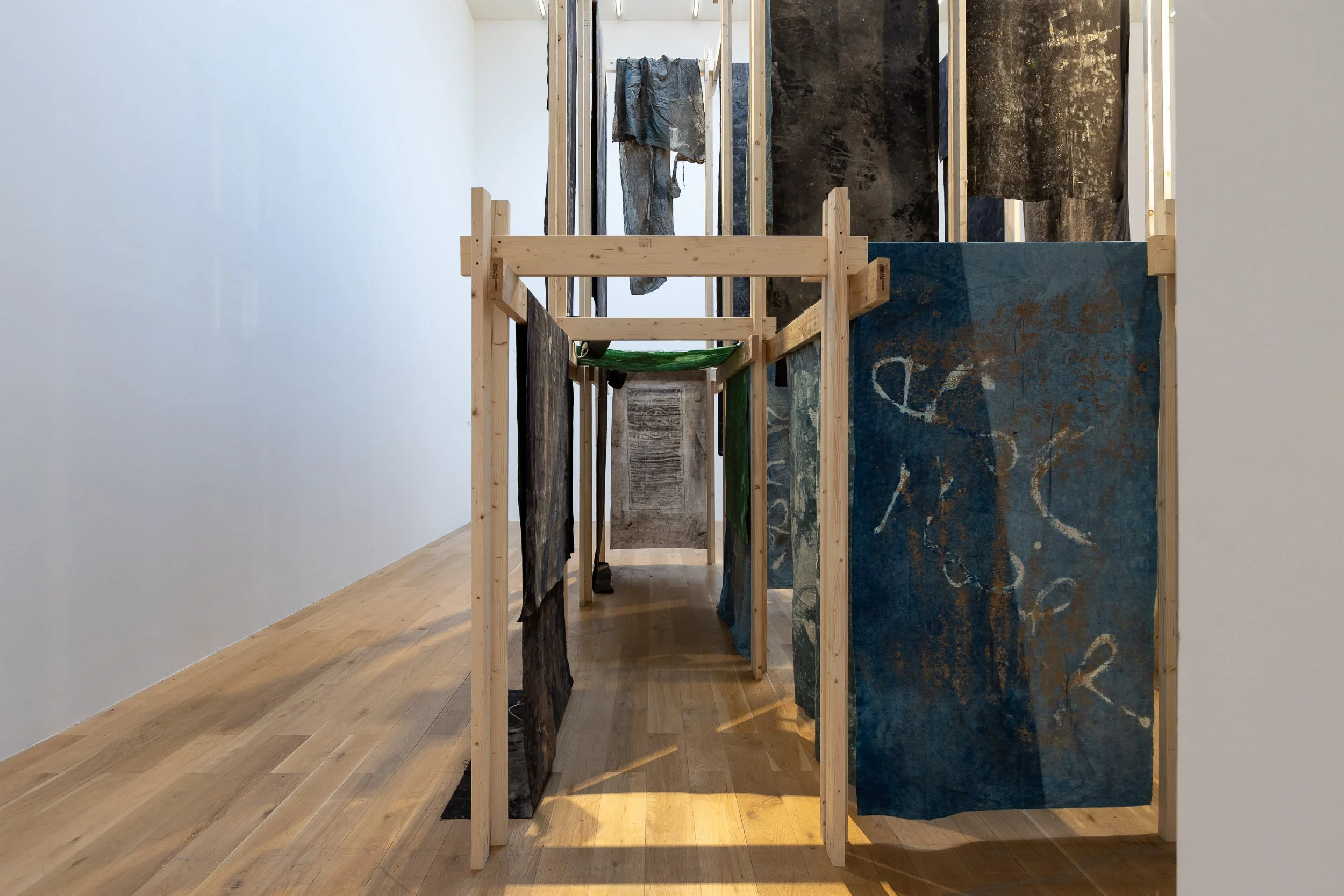
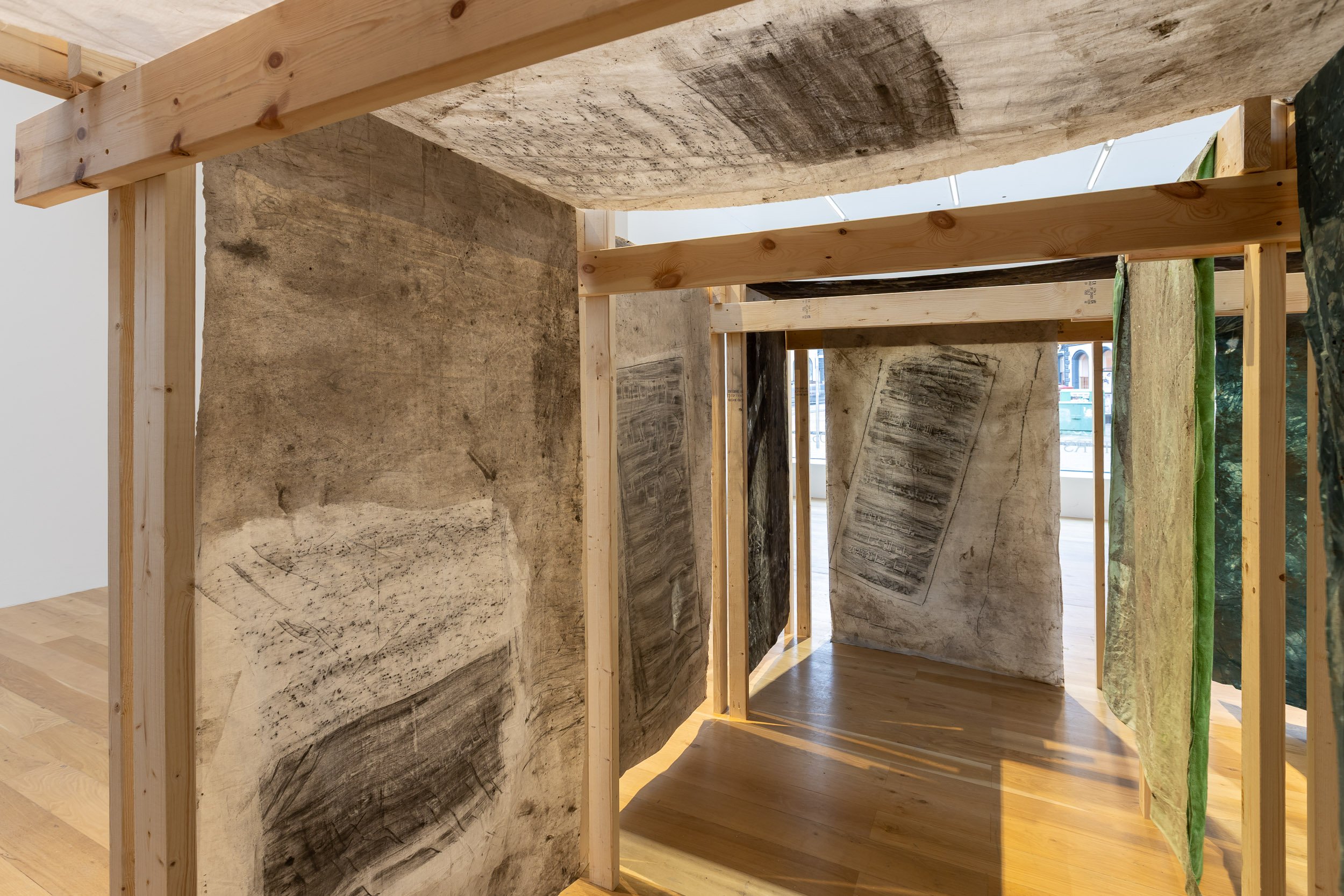
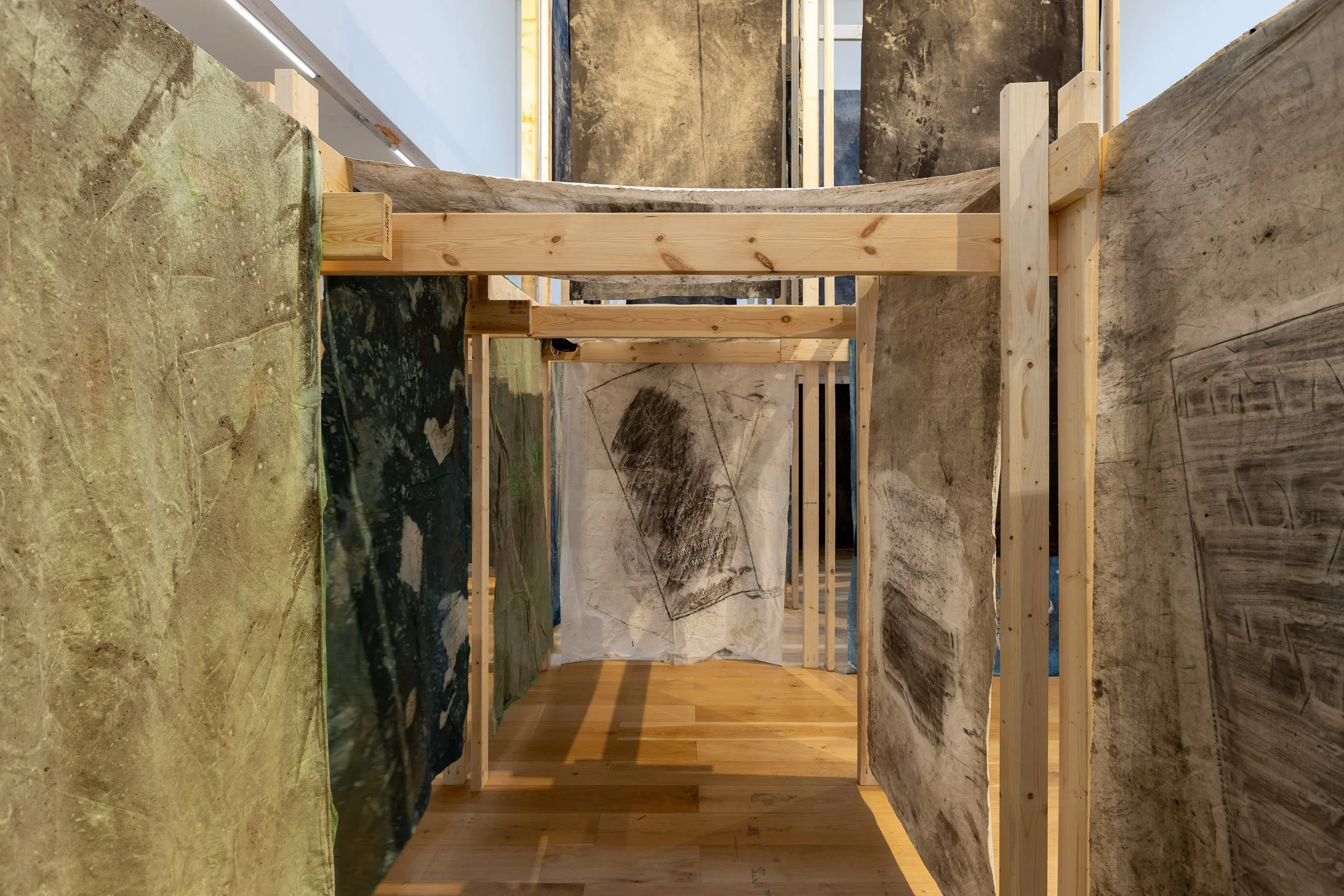
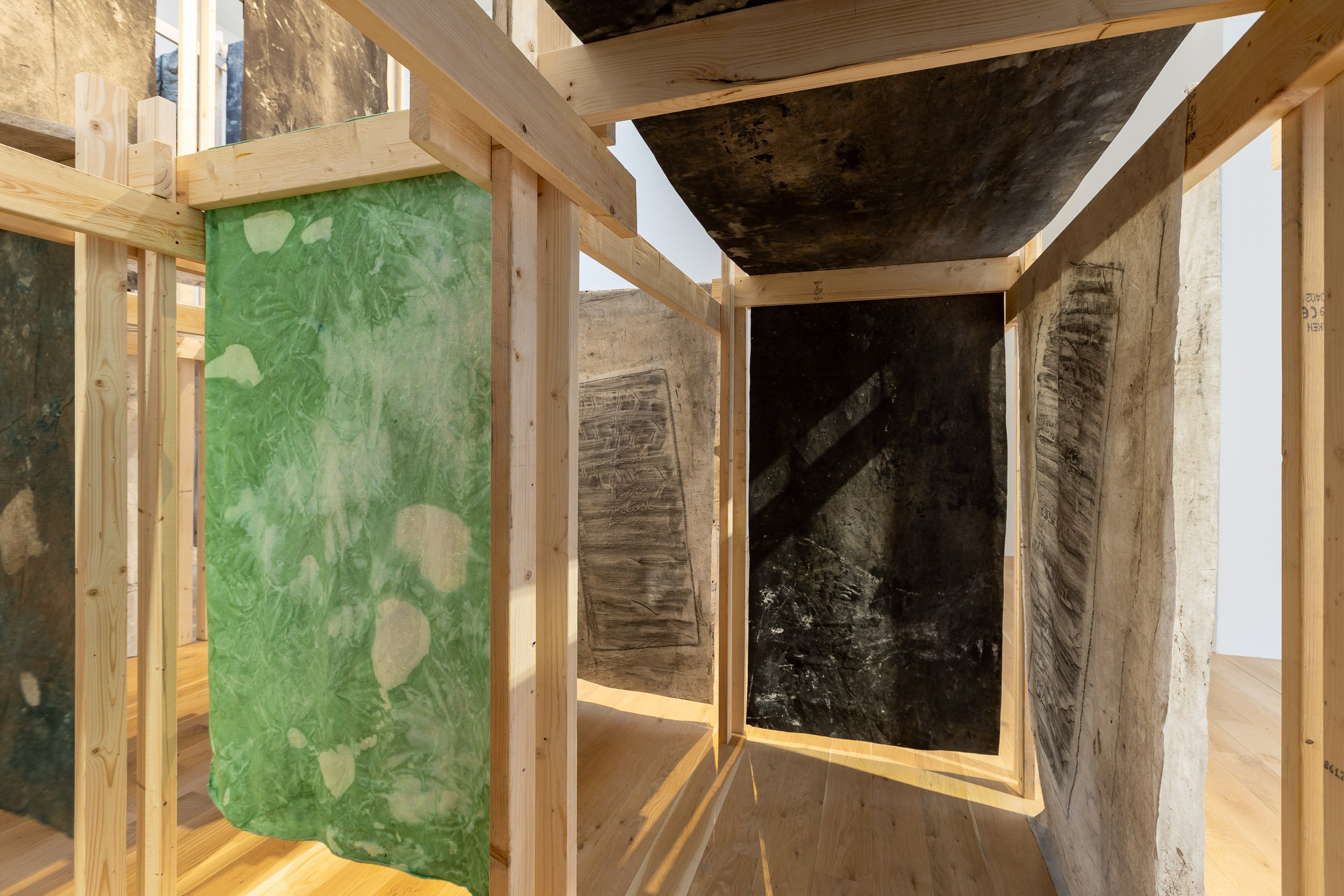
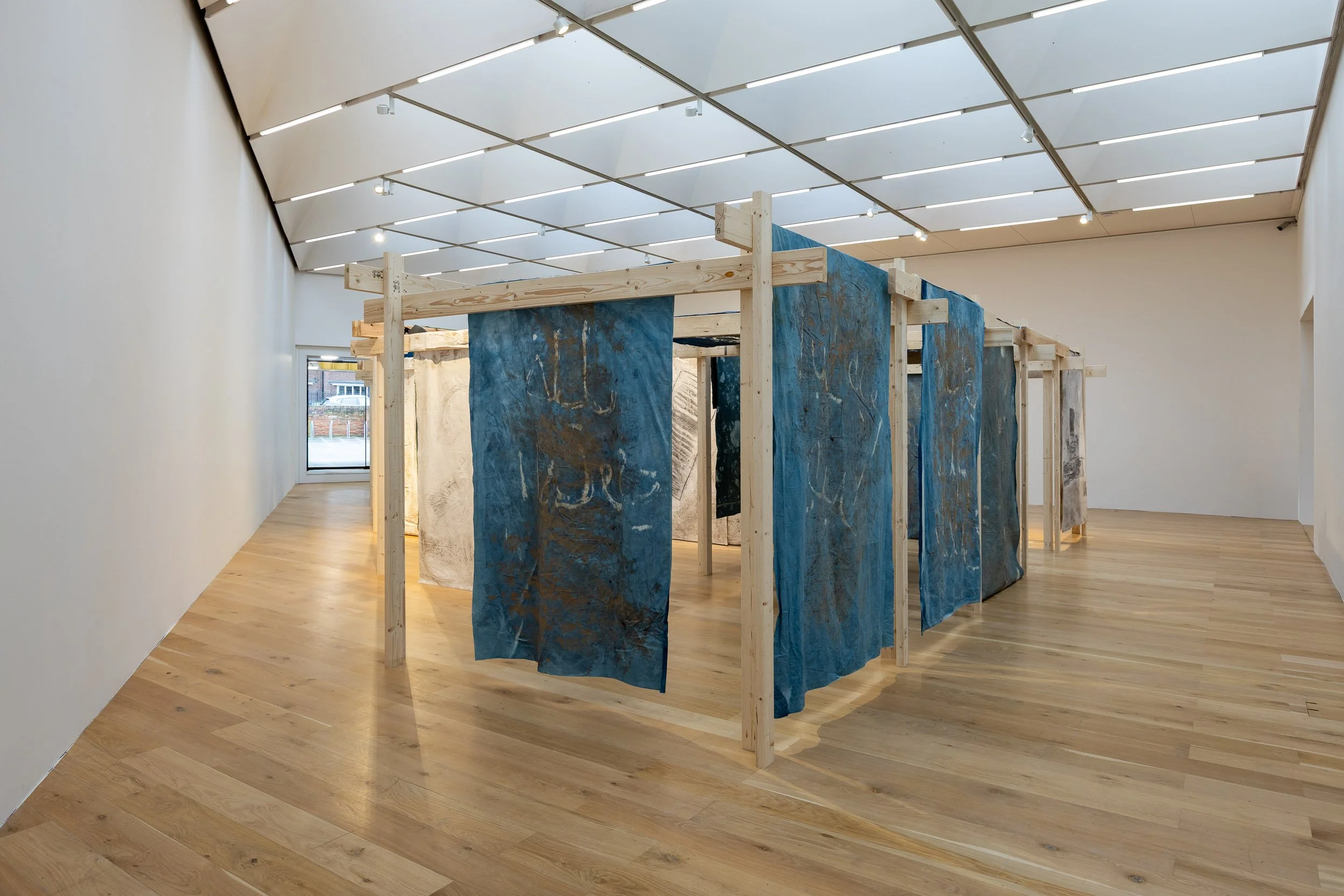
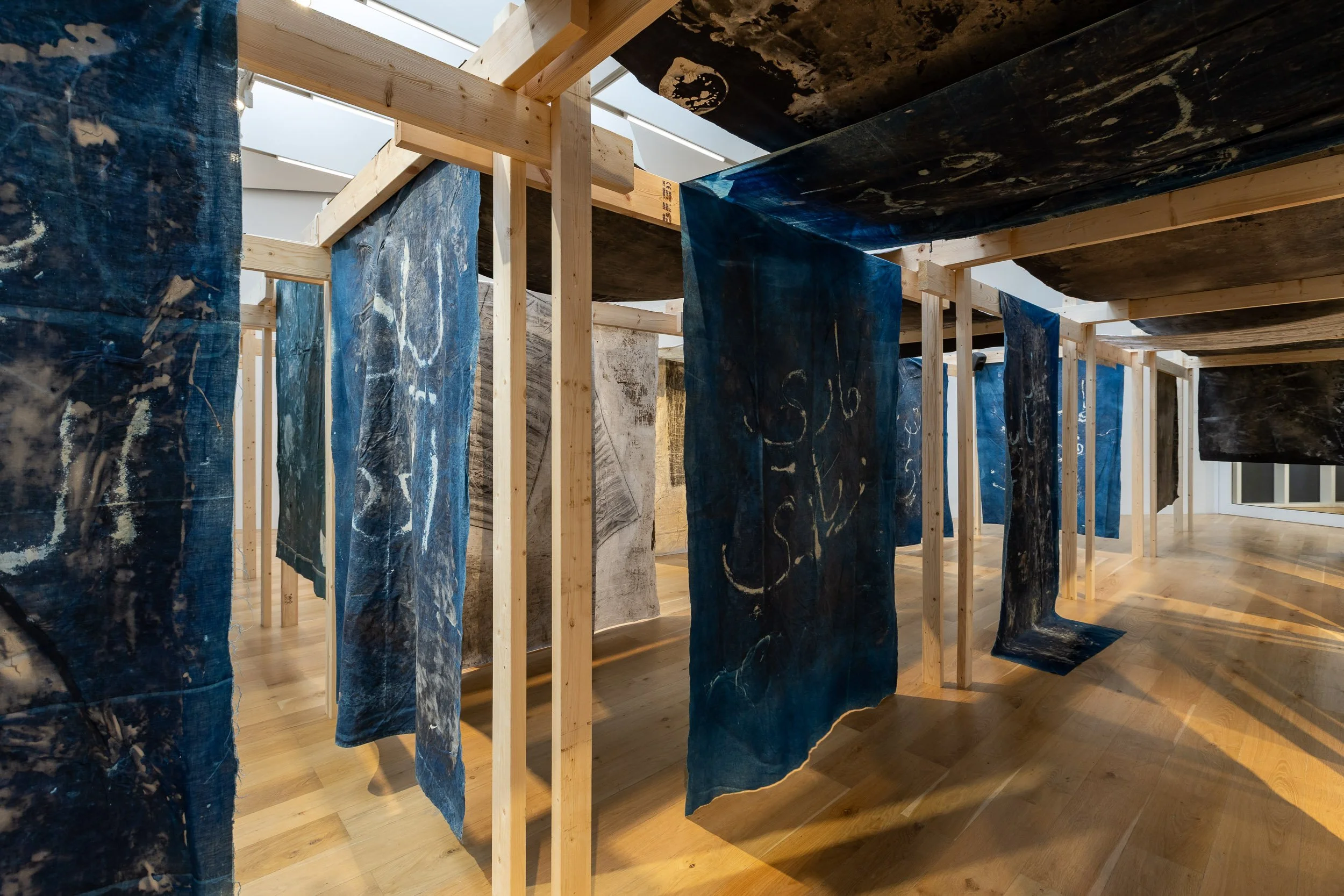
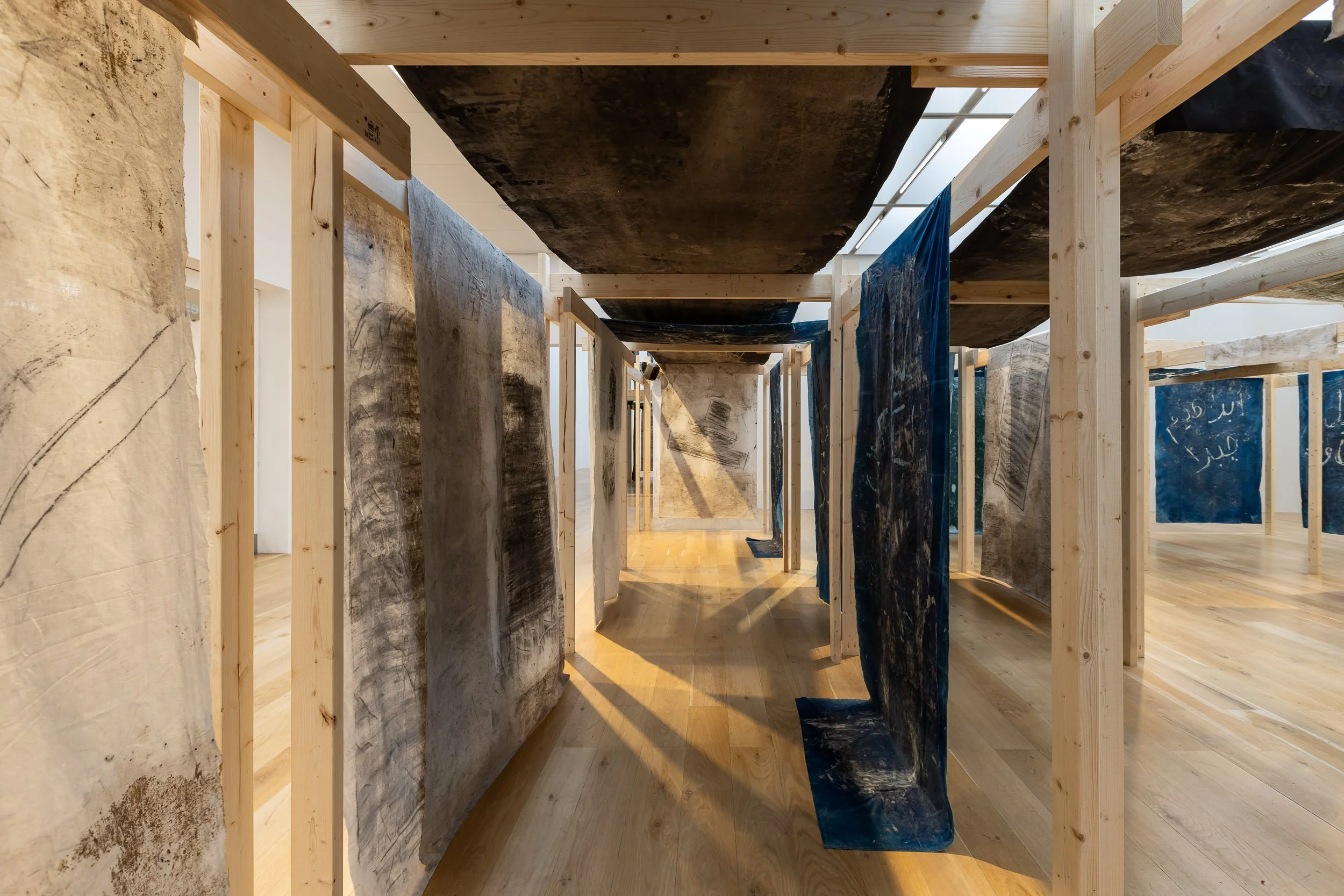
Cemetery of Martyrs comprises an immersive sonic installation incorporating a canopy of dyed and marked fabrics layered and draped over a site-specific wooden structure. This work is the outcome of over two years of research and field trips, guided by conversations with historians, her communities and collaborators. Using the process of frottage, Nasser has worked in many geographic contexts to collect charcoal grave rubbings from the grave stones and sites of seminal artists, writers, poets, filmmakers, historians and journalists from across Lebanon, Palestine, Syria, Egypt, Jordan, the United Kingdom and the United States, who all, at some stage of their lives, spent time in Beirut, Lebanon.
The resulting collection of graves represent the lives of cultural figures from the mid nineteenth century (specifically The Nahda, a cultural and intellectual Arab Renaissance movement) to the present day, who all used their art as a tool to fight for independence and freedom in times of political dominance and occupation. Each life represented in the installation, has shaped – through their own artistic and intellectual work – the notion of true sovereignty in Western Asia.
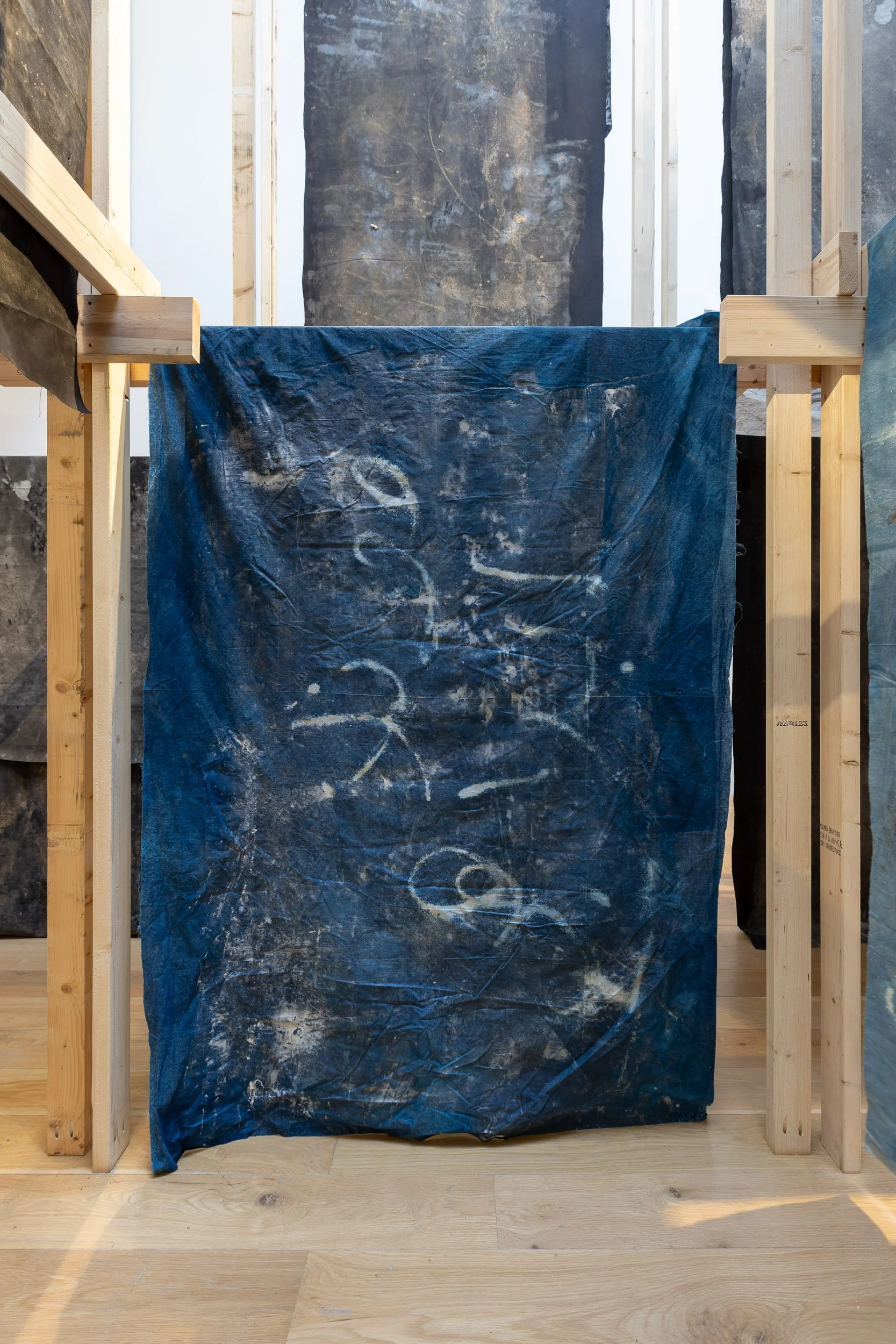
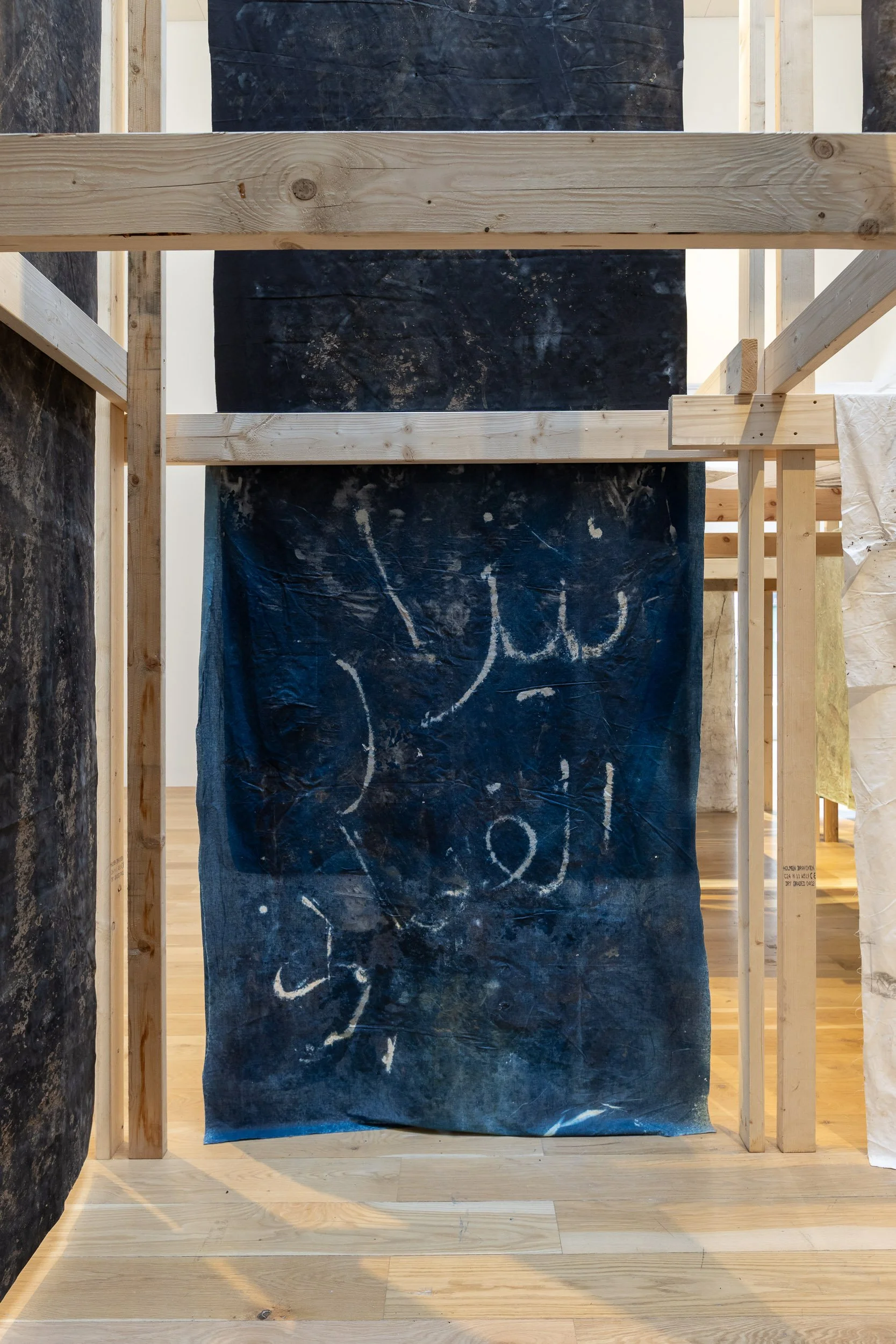
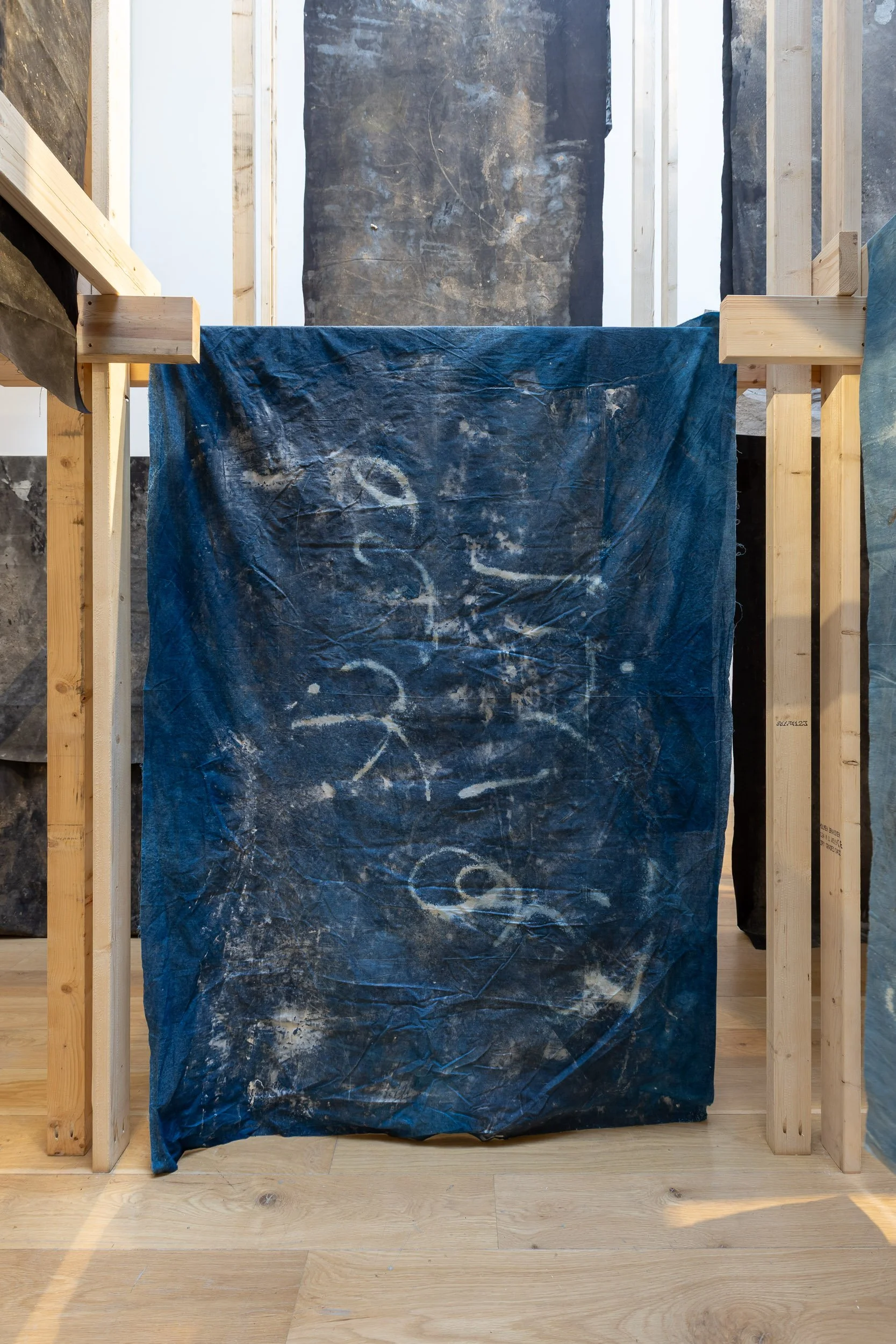
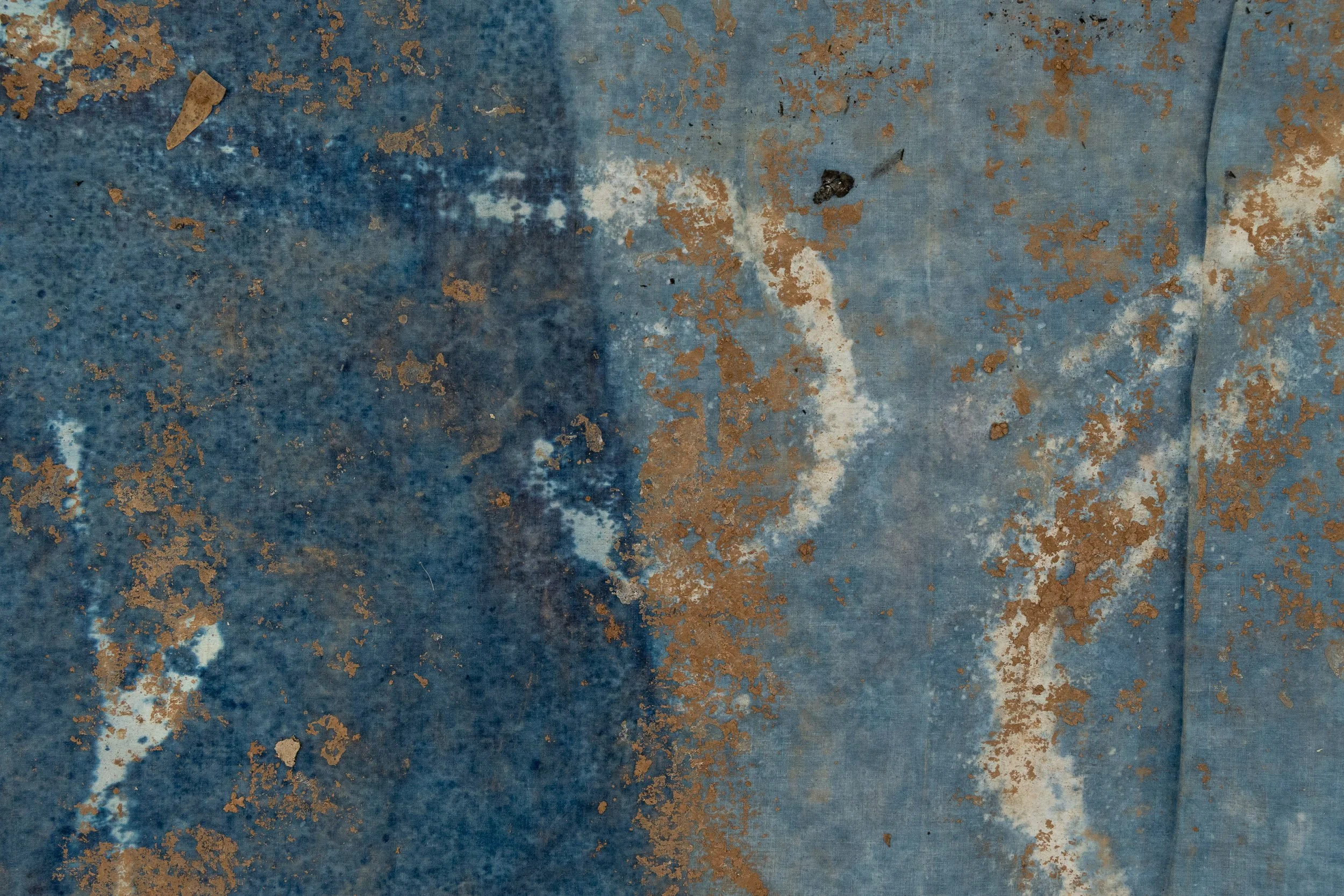
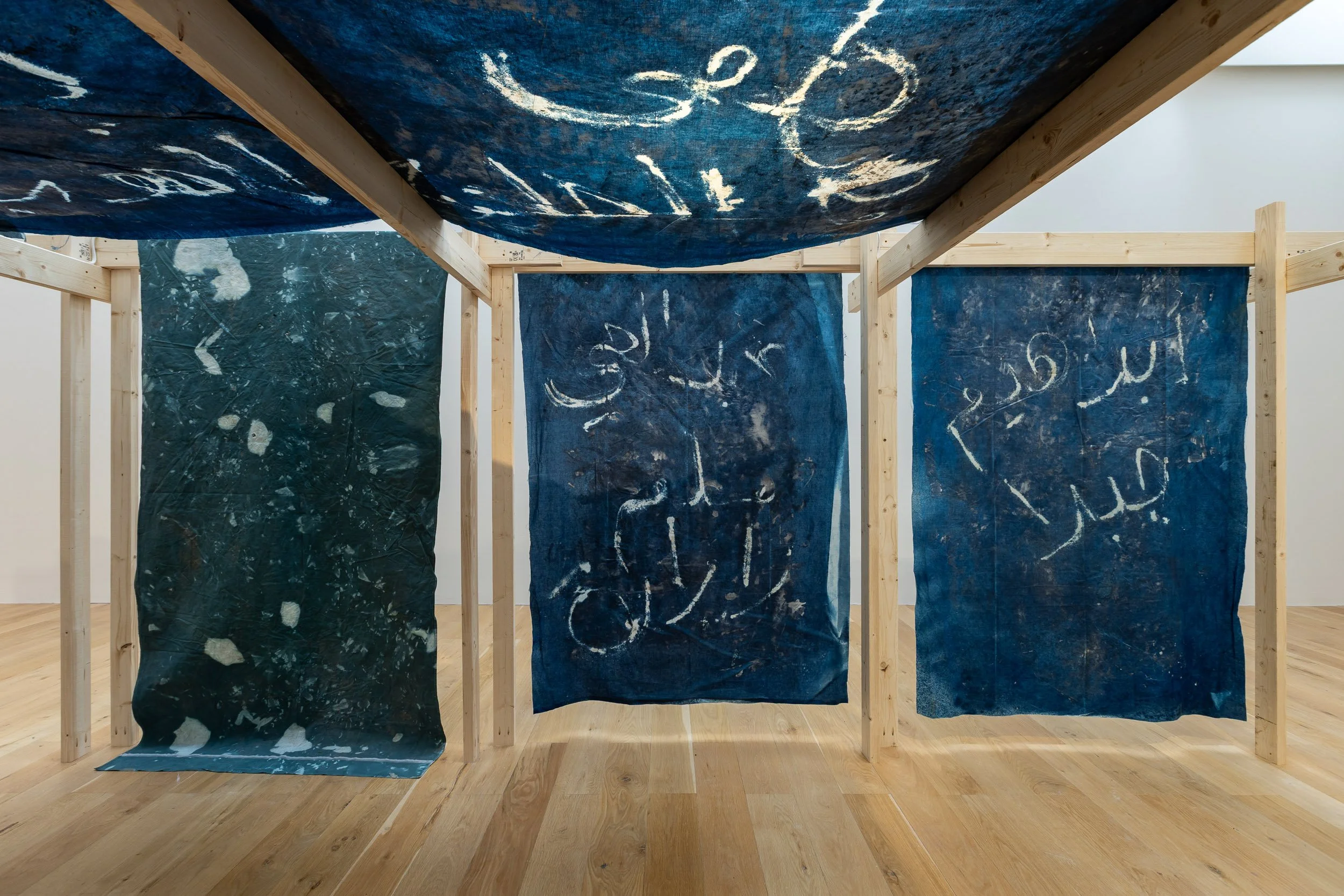
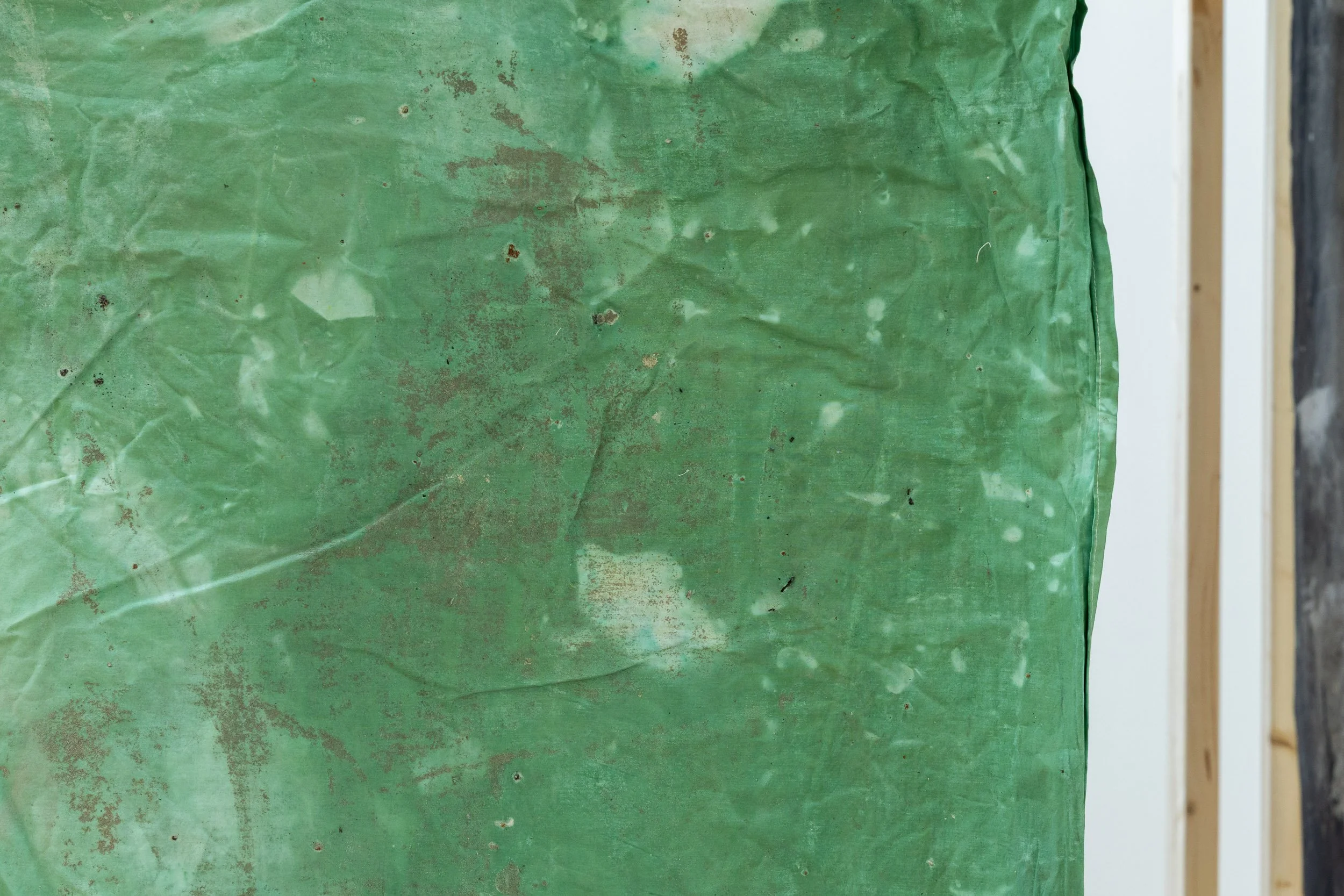
Within the installation, Nasser layers black and green mourning fabrics that she has dyed and marked with earthen elements, such as shells, seeds, ash, and crushed malachite, amongst cyan blue and charcoal-marked fabrics. Charcoal rubbings transcribe the surfaces of known graves, while cyanotype treated fabrics act as a visual representation of those whose graves are unreachable or unknown by featuring the person’s name transcribed in Arabic in various scales and legibility. An accompanying audio work permeates throughout Nasser’s installation. Composing field recordings from the sites of the graves and cemeteries visited by Nasser during the production of the work, the audio presence is sporadic and subtle; linking the realms of the living and the dead.
Reflecting on the challenge of interpreting the extreme and unceasing violence of the present moment, Cemetery of Martyrs invites audiences to contemplate the endurance of cultural sovereignty and to reckon with their own role in forging new pathways of thought and action. Nasser’s cemetery creates a collective space to gather and hold the voices and legacies of people who were steadfast in their commitment to freedom; a graveyard to mourn, learn, and reaffirm the power of culture, art and humanity to connect us to histories of resistance and renewal.